Paver Installation Scranton
Paver Installation in Scranton, PA
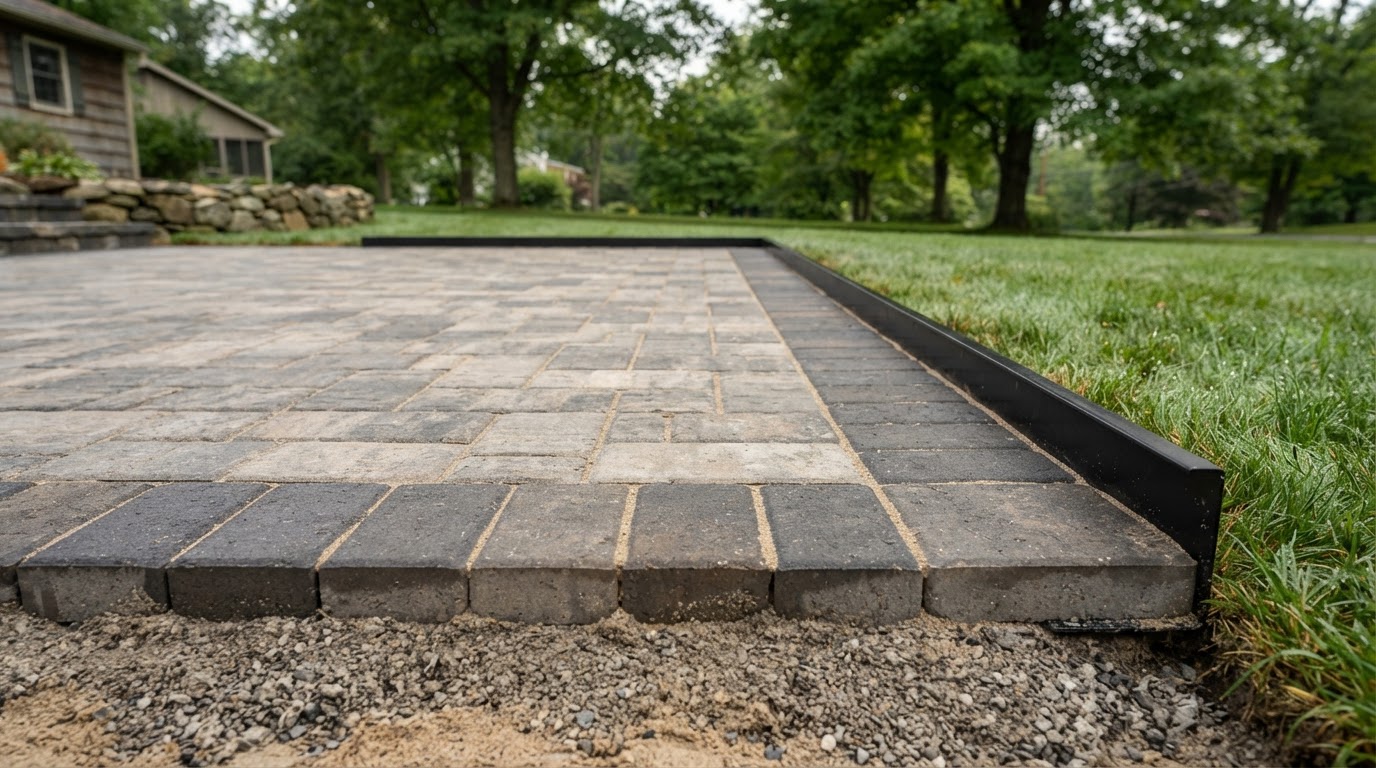
A paver surface is only as stable as the section beneath it. The visible units get the attention, but the work that decides long-term performance happens below grade: excavation to the right depth, a compacted aggregate base placed in lifts, a bedding layer screeded to a consistent elevation, edge restraint spiked into the base, and joint material swept and vibrated into every gap.
Application changes the engineering. A pedestrian patio, a vehicle-loaded driveway, a walkway on level ground, and a set of steps climbing a hillside are not the same project and do not use the same base section. The base depth, compaction effort, and edge detail all follow the load the surface will carry and the ground it sits on.
Across Lackawanna County, freeze-thaw cycles and sloped terrain mean drainage and base preparation cannot be treated as optional. Water that sits in or under a base freezes, expands, and moves the surface. The installation discipline is what keeps the finished pavers flat through that cycle.
Where Pavers Can Be Used Around Your Property
The same installation discipline adapts to different applications — each with its own load, drainage, and design considerations.
Patios
Pedestrian-loaded surfaces designed around furniture zones, circulation, and transitions to lawn or landscape. Optimized for feel and pattern.
ExploreDriveways
Vehicle-rated paver systems with a heavier base section, deeper compaction, and edge restraint engineered for vehicular load.
ExploreWalkways & Paths
Connecting curb, entry, and backyard zones — including hillside runs that need steps, landings, and drainage alongside the path.
ExploreWhat Goes Beneath a Paver Surface?
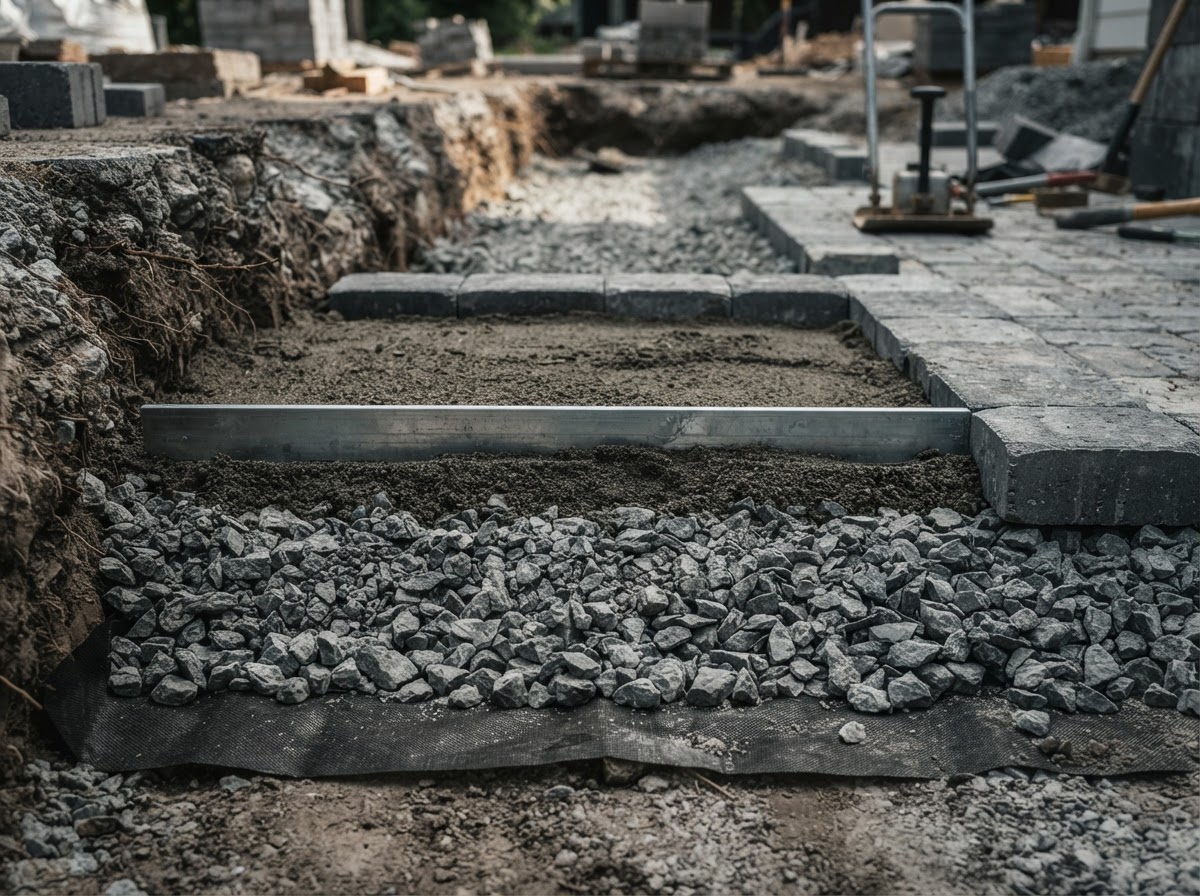
Excavation. The subgrade is excavated to a depth that accounts for base, bedding, and paver thickness so the finished surface meets surrounding grade. Undisturbed subsoil is the target; soft or organic material is removed.
Aggregate base. Crushed aggregate is placed and compacted in lifts to the specified depth. Compaction in layers — not one deep dump — is what gives the base density. On poorly draining subsoils, geotextile separation keeps the base from migrating into the subgrade.
Bedding, edge, and joint. A screeded bedding layer sets the final elevation. Edge restraint locks the perimeter. Joint material — typically polymeric sand — is swept in and vibrated so the joints are full and the surface interlocks as one field.
Drainage and grade. Surface pitch moves water off the patio and away from the house; the surrounding grade carries it somewhere safe. Drainage is planned with the base, not after water pools. Where runoff is already a problem, patio drainage solutions are addressed as part of the install.
Patterns, Borders & Material Choices
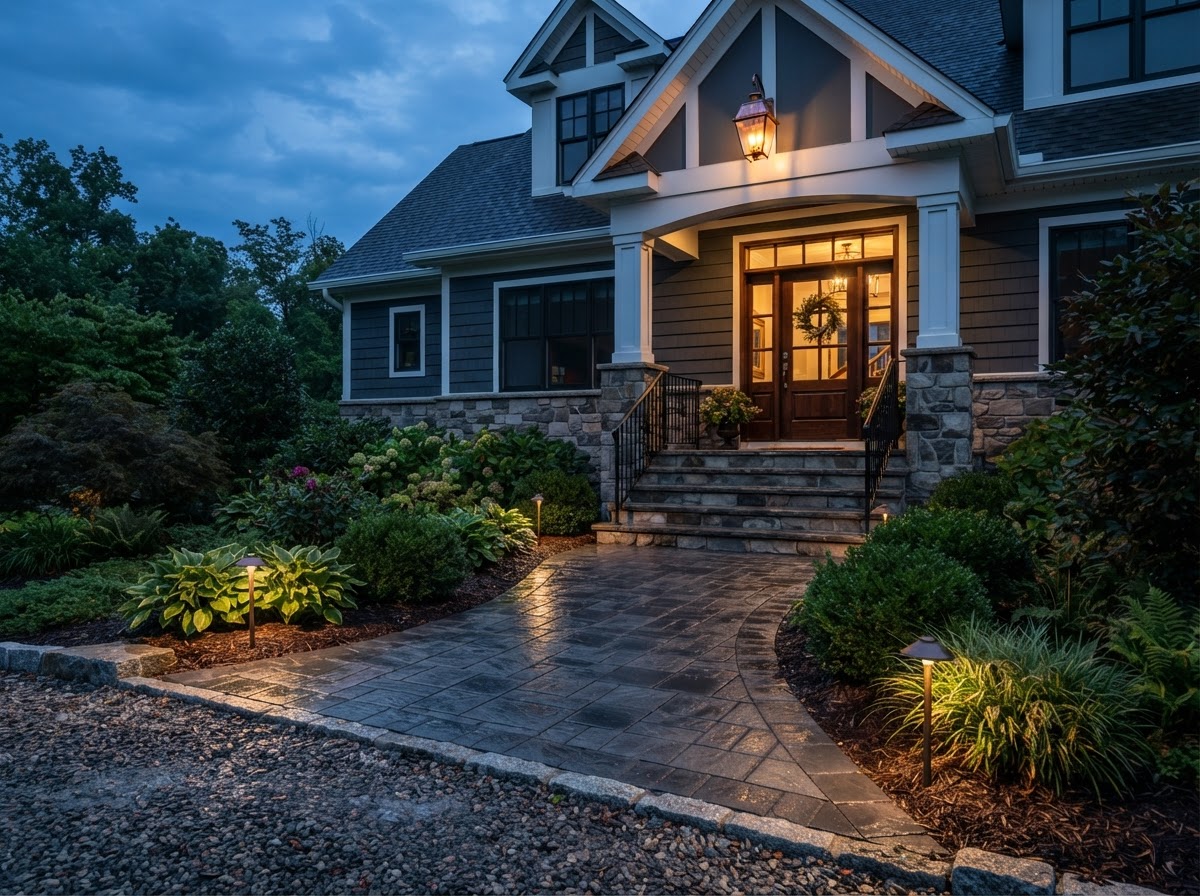
Running bond, herringbone, basketweave, and modular multi-piece patterns each read differently and suit different applications — herringbone resists lateral movement well for driveways, while modular patterns add visual interest to patios. Soldier or sailor course borders frame the field and define edges.
Texture, color, and scale are matched to the home's architecture and the application. Concrete pavers offer consistency and broad options; natural stone brings regional character. See concrete pavers and natural stone patios for material detail.
Planning Pavers for Northeastern Pennsylvania Weather
Northeastern Pennsylvania cycles through repeated freeze-thaw between December and April. Moisture trapped in a base or joint freezes and expands, and a surface built on an underbuilt or poorly drained base will reflect that movement. The defense is at the base: proper depth, compaction in lifts, geotextile separation where needed, and drainage paths that keep water from sitting under the pavers.
Sloped lots add runoff to the equation. A paver surface on a grade has to shed water without undermining the base below it, and steps or landings on a hillside need drainage planned alongside them. The surface material matters, but the freeze-thaw performance lives in the base and drainage.
Over time, joint material breaks down and surfaces benefit from restoration and re-sanding and sealing to protect against salt and freeze-thaw. When sections have already settled, paver patio repair and sunken paver leveling can lift and reset the surface by correcting the base beneath it.
Managing Runoff at the Surface
Where runoff or stormwater is a concern, permeable paver installation uses widened joints and open-graded aggregate to let water infiltrate at the surface rather than sheeting off it — useful on tight lots and sloped properties.
View Service Areas →Planning a Paver Project?
Talk through the application, base conditions, and material direction.
Paver Installation Questions
Connected Paver Services
Paver Patios
Designing patio layouts around use, grade, and architecture.
Paver Driveways
Vehicle-rated paver systems with heavier base and compaction.
Paver Patio Repair
Lifting, resetting, and base correction for settled surfaces.
Paver Sealing
Penetrating sealers protecting joints and surface from salt.