Patio Drainage Solutions Scranton
Why Water Collects Around Paver Patios
A patio that holds water almost always has a grade problem — somewhere. The surface may have lost its pitch, a section may have settled into a low spot, the lawn or a bed may be directing runoff onto the patio, or roof water may be discharging right at the edge. More than one of these can be true at the same time.
That is why a patio drainage problem is evaluated as a site problem, not just a surface problem. The surrounding grade, the runoff sources, and the patio's own pitch are all part of the same picture. Fixing only what is visible often leaves the actual cause in place.
This page is specifically about water on, beside, and around patios. For broader yard and property drainage, see our drainage solutions page.
Lost Surface Pitch
The patio no longer slopes toward a drainage direction.
Settled Low Spot
A section has dropped below the surrounding surface.
Surrounding Grade
Lawn or beds direct water toward the patio.
Roof Discharge
Downspouts dump water at or onto the surface.
Uphill Runoff
A slope above sends water down to the patio edge.
Edge Transition
The patio-to-landscape edge traps water at the border.
Where the Water Sits Points to the Cause
The location of the standing water is the first clue, not the diagnosis. Where water collects helps narrow down what may be driving it — but the actual cause is confirmed by looking at the surface, the grade, and the runoff around the patio together. These are possibilities, not a verdict.
On the patio
Surface pitch or localized settlement may need evaluation.
At the patio edge
Surrounding grade or transition conditions may be involved.
Between patio and house
Runoff and elevation relationships should be evaluated.
Below a slope
Uphill runoff may be contributing.
Near a retaining wall
Wall and site drainage may need to be considered together.
These are starting points for evaluation, not definitive diagnoses. The actual cause is confirmed by inspecting the surface pitch, the surrounding grade, and the runoff pattern at the property.
Repairing the Patio vs Correcting the Surrounding Site
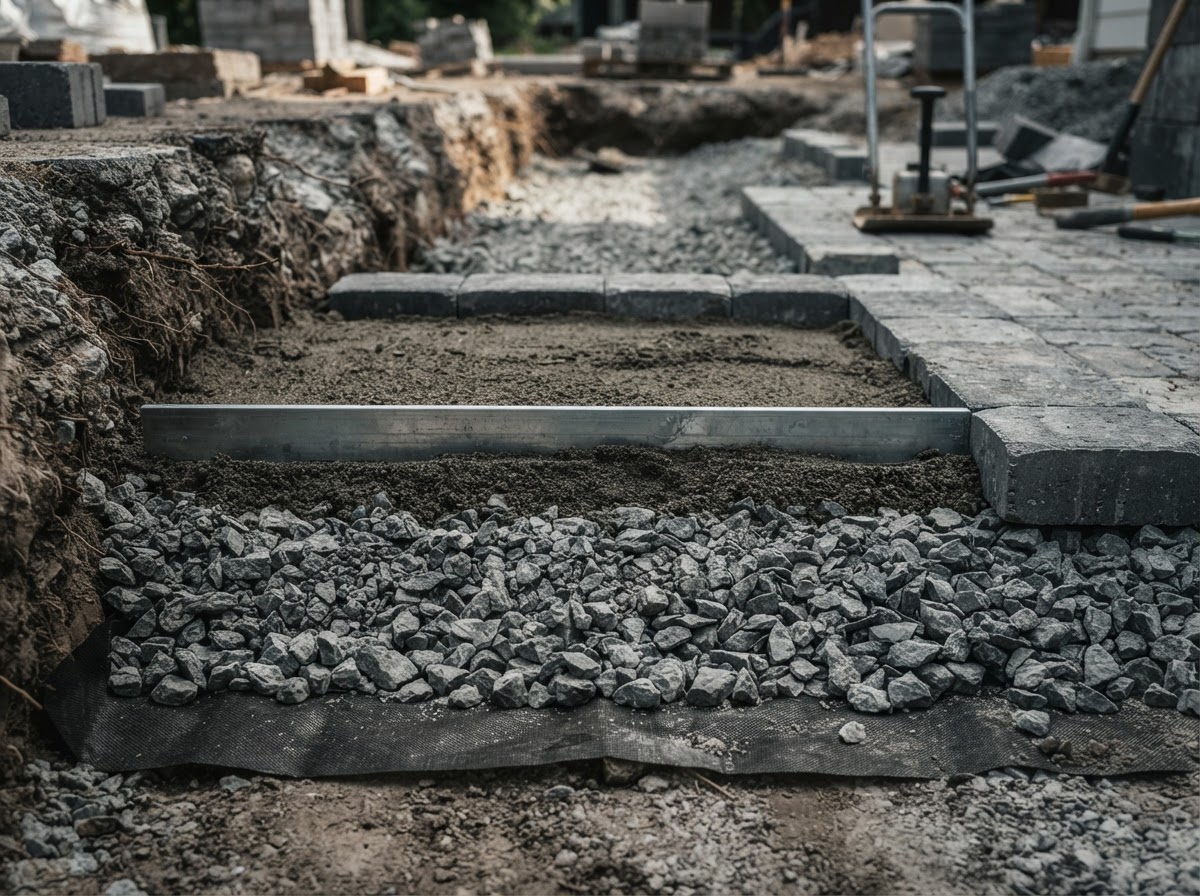
If pavers have settled enough to create a low area, localized paver leveling may be part of the solution. But simply leveling pavers without understanding a continuing water problem often does not address the underlying condition — the low spot can return, or the water simply finds the next low place.
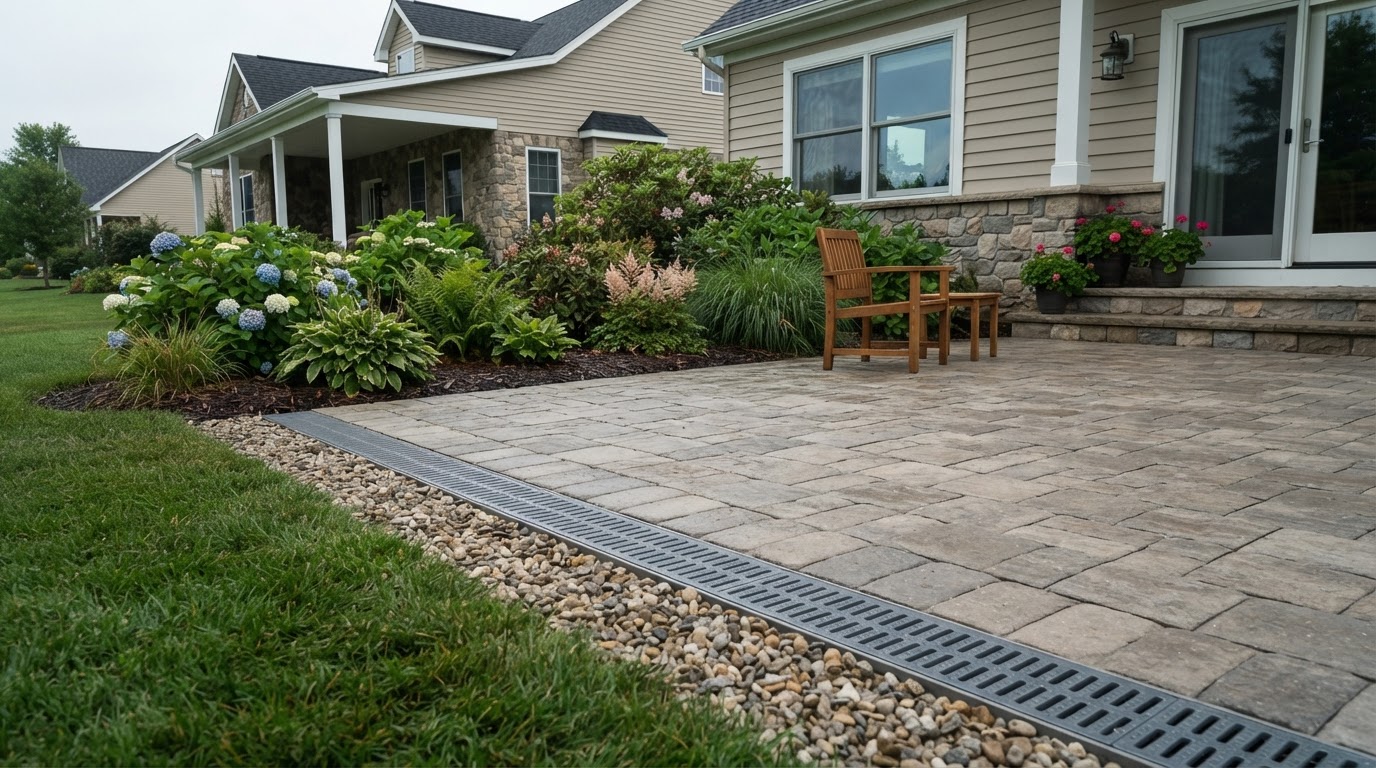
The question is whether the patio is the problem or the site around it is. Sometimes the fix is at the patio edge — a drainage channel, a grade adjustment. Sometimes it is upstream — redirecting a downspout, regrading a bed. Often it is both.
When the patio is the issue
- Surface pitch has been lost or was never adequate.
- A localized low spot has formed from settlement.
- The patio edge traps water with no drainage exit.
When the site around it is the issue
- Surrounding grade directs runoff onto the patio.
- Roof downspouts discharge at or near the surface.
- A slope above sends water down to the patio edge.
Don't seal over a drainage problem
Sealing or re-sanding a patio with a drainage issue does not fix the water — it treats the surface while the cause continues. Drainage and grade are corrected first, then surface work like restoration or sealing follows if appropriate.
Patio Drainage in Northeastern Pennsylvania
Spring rain, snowmelt, and freeze-thaw across the Scranton area put patios under real water pressure. A patio that drains fine in summer can hold water in early spring when the ground is saturated and snowmelt is running off. Established neighborhoods with mature grade changes and older downspout layouts are especially common sources of patio drainage calls in Lackawanna County.
Spring Snowmelt
Saturated ground and melting snow overwhelm patios with nowhere to drain.
Freeze-Thaw
Cyclic freezing can shift paver elevations and create new low spots over time.
Mature Grade
Older neighborhoods often have grade and downspout layouts that send water to patios.
Hillside Runoff
Sloped lots above a patio direct downhill water straight to the edge.
Water Collecting On or Beside Your Patio?
Tell us where the water sits, when it appears, and what the grade around the patio looks like — and start with an evaluation of the cause.
Patio Drainage Questions
Related Drainage & Repair Services
Drainage Solutions
Broader property and yard drainage planning.
Sunken Paver Repair & Leveling
Correcting settled pavers that create low spots.
Paver Patio Repair
Evaluating uneven, loose or damaged patio pavers.
Permeable Paver Installation
Paver systems designed to manage water through the surface.