Sunken Paver Repair & Leveling Scranton
Why Pavers Sink or Settle
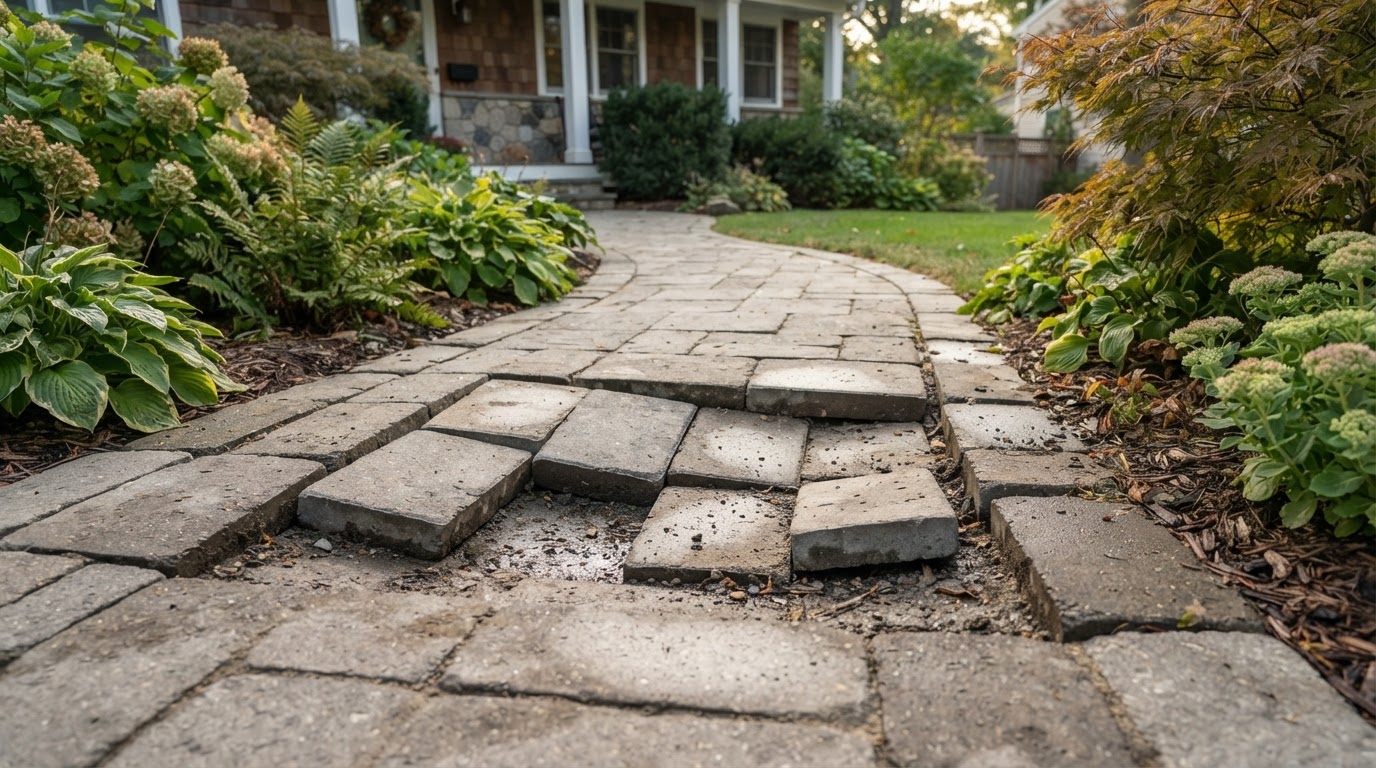
A sunken paver is not a paver problem — it is a base, water, or edge problem showing itself at the surface. When the support beneath a paver gives way, the unit drops with it. Lifting the paver back to grade without addressing why it dropped is why so many low spots return after a quick fix.
That is why the cause is evaluated before the surface is corrected. The contributing factors below are the usual suspects, and more than one can be involved on the same patio.
Base Settlement
Aggregate that was insufficient or poorly compacted compresses over time.
Water Movement
Runoff or subsurface water erodes base material from beneath the pavers.
Edge Movement
Failed edge restraint lets the field spread and individual units drop.
Disturbed Base
Later work or excavation disturbs the compacted base beneath a section.
Freeze-Thaw
Cyclic freezing shifts base material and lifts or drops pavers.
Heavy Loading
Vehicle or point loads exceed what the base was built to carry.
How Localized Paver Leveling May Work
The repair follows the cause, not a fixed method. A localized low spot with sound surrounding base is a good lifting candidate; a patio that has settled broadly often points to a deeper issue. The steps below describe a typical localized repair — the actual approach depends on what the inspection finds.
Identify the Area
Map where settlement has occurred and how far it extends.
Lift Applicable Units
Remove the pavers from the affected area to reach the base.
Inspect Underlying Support
Check base condition, compaction, water, and edge restraint.
Correct the Base
Re-establish base and elevation to address the cause, not just the surface.
Reset the Pavers
Return units to a flush, level surface aligned with the field.
Restore Joints & Transitions
Refill joints and check drainage and edge conditions.
Water, Base Conditions & Paver Settlement
Water is the most common reason a low spot comes back after a quick fix. Runoff directed at the patio, a downspout discharging nearby, or a surrounding grade that traps water against the edge all work base material out from under the pavers. If water is the cause, it has to be part of the repair.
Trip Hazard Language
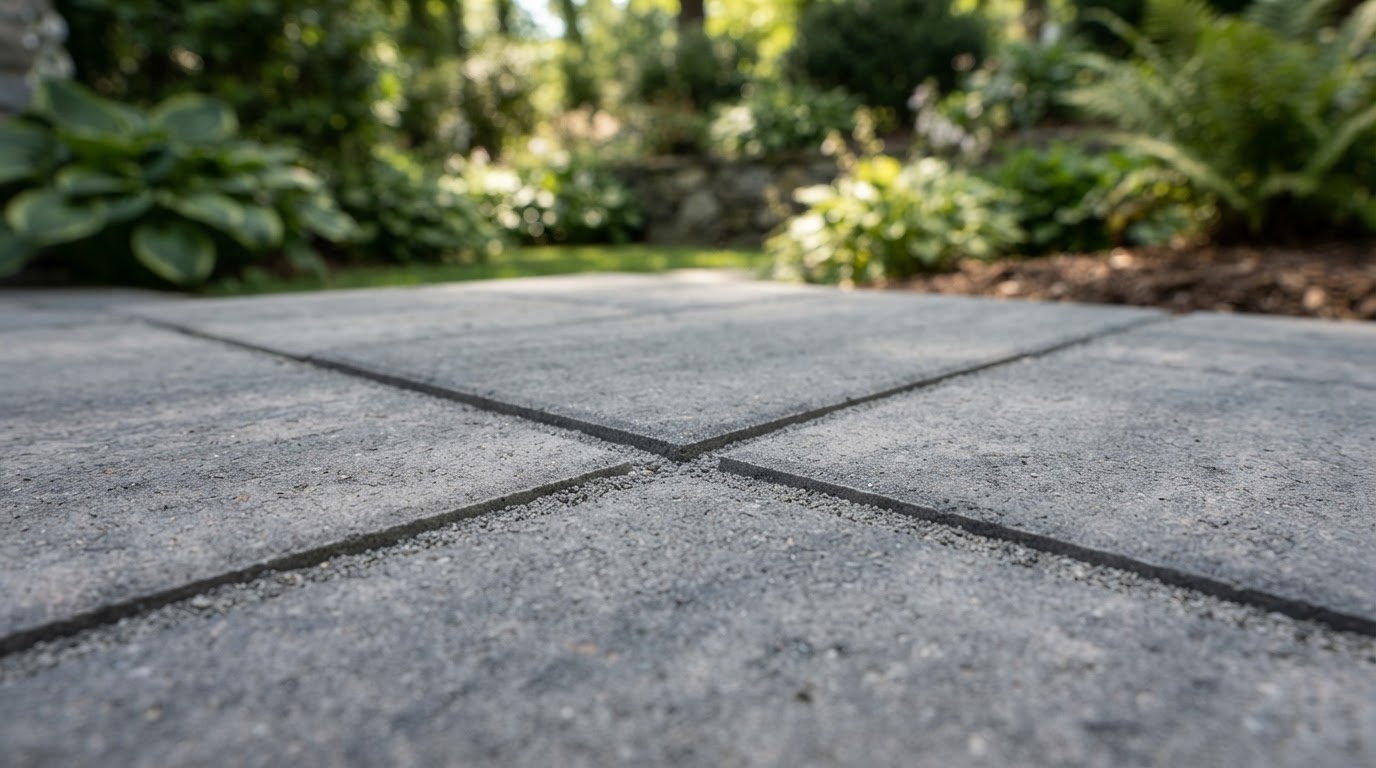
Raised or sunken units can create abrupt elevation changes in walking areas. Correcting those transitions is as much a safety consideration as an aesthetic one — uneven pavers are inconvenient and can be a hazard in daily use.
When Uneven Pavers Point to a Larger Problem
Settlement that recurs, spreads across the patio, or appears along with standing water often signals a base or drainage failure rather than a surface issue. In those cases, isolated lifting may not hold, and paver patio repair with drainage correction — or, in some cases, a rebuild — is the more durable path.
What You See → What May Be Happening
- Low area in patio → localized settlement or support issue may be involved.
- Patio settles again after repair → cause was not corrected the first time.
- Water collecting beside patio → grade or drainage may need evaluation.
- Edge pulling outward → edge restraint or support may need attention.
These are possible explanations, not definitive diagnoses. An on-site evaluation confirms the actual cause.
Settlement in Northeastern Pennsylvania
Freeze-thaw cycles, snowmelt, and seasonal moisture across the Scranton area all contribute to paver settlement over time. Established properties with mature grades and older base installations are especially common settings for low spots. Climate is one factor among several — base condition and drainage often matter more than weather alone.
Freeze-Thaw
Cyclic freezing shifts base material and is a frequent contributor to settlement.
Snowmelt & Runoff
Melting snow and spring runoff erode base material beneath pavers and walkways.
Established Yards
Older properties often have settled grades and base installations that show their age.
Walkways & Entries
Walkway and entry pavers settle where water collects or edges have failed.
Are Your Pavers Sinking or Uneven?
Describe where the low spots are and start with an evaluation of the cause.
Sunken Paver Repair Questions
Related Repair & Drainage