Paver Patio Repair Scranton
Signs Your Paver Patio May Need Repair
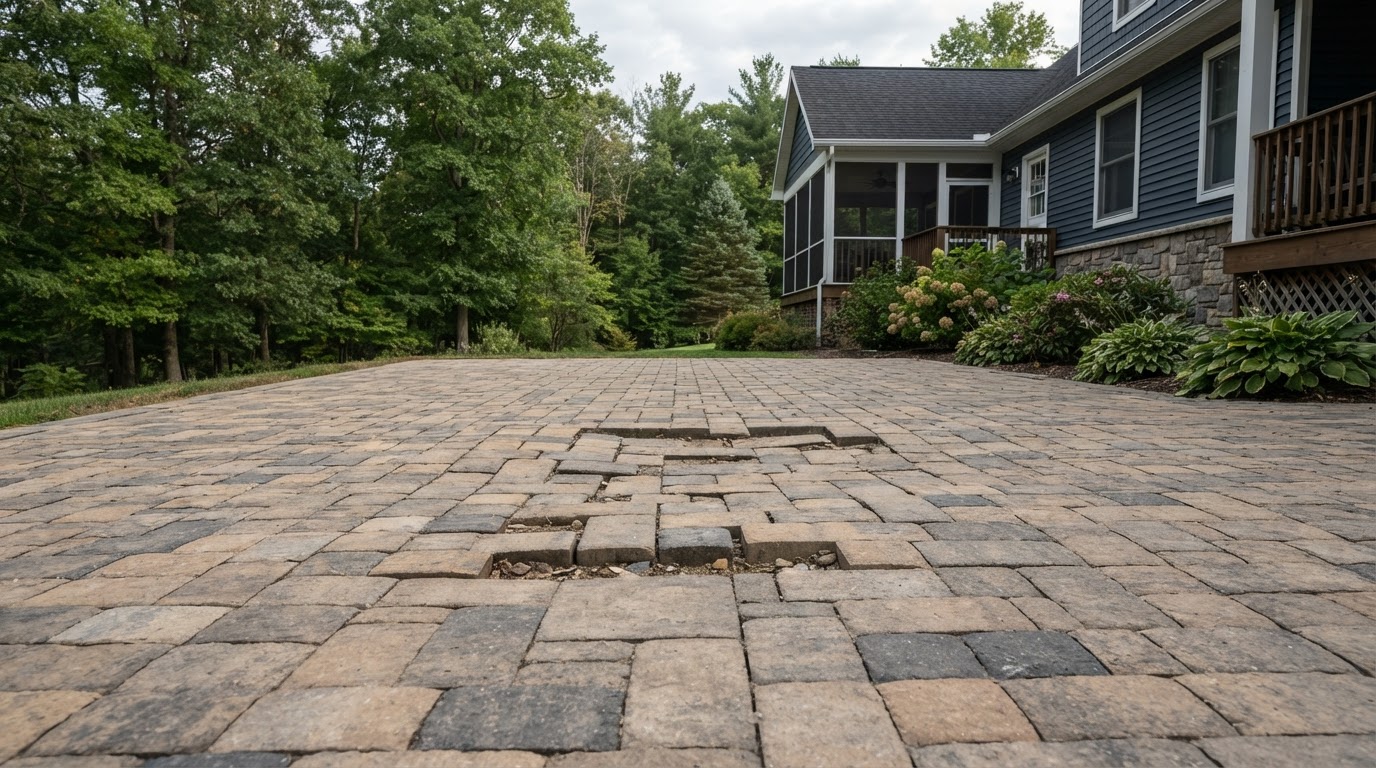
Patio problems rarely announce themselves all at once. A low spot that holds water, an edge that has pulled away, a section that rocks underfoot — these are early signals that something beneath the surface has changed. Catching them early often keeps a small repair from becoming a full rebuild.
The symptoms below do not all share one cause. A sunken middle, a raised edge, and an open joint can each point to a different underlying condition, so the repair path depends on what an inspection finds rather than on what the surface looks like alone.
Sunken Sections
A low area where pavers have dropped below the surrounding field.
Raised Sections
Units sitting high, often near edges or where frost has lifted them.
Loose Units
Individual pavers that rock or shift underfoot when walked on.
Open Joints
Gaps between pavers where joint material has eroded or washed out.
Edge Movement
The outer border pulling away or spreading outward.
Water Collecting
A low spot that holds runoff after rain instead of draining.
Why Patio Pavers Become Uneven
Settlement usually traces back to what is below the pavers. Base that was insufficient or poorly compacted, water washing out the aggregate, a failed edge restraint, or freeze-thaw movement can all push a section out of level. In established Scranton neighborhoods, root activity and adjacent grade changes are also common contributors. The cause shapes the repair — correcting a base issue is different from simply lifting a sunken paver back to grade.
Lift Affected Pavers
Remove the units from the problem area to access what lies beneath.
Evaluate Underlying Material
Inspect base condition, compaction, and any water or erosion.
Correct Localized Support
Re-establish base and elevation where settlement has occurred.
Reset & Re-Level
Return pavers to a flush surface aligned with the surrounding field.
Repair Edge Conditions
Restore or replace edge restraint where the border has spread.
Restore Joint Material
Refill joints with appropriate sand so the repair blends in.
These are conceptually how a localized repair may proceed — not a single method that applies to every patio. The actual repair depends on the cause and condition found on site.
Can a Paver Patio Be Repaired Instead of Replaced?
Many localized paver problems may be repairable without replacing the entire patio, but the right approach depends on the extent of movement, condition of the base, drainage, edge conditions, and overall patio. The useful distinction is between a localized issue and a systemic one — the first is a repair candidate, the second often points toward rebuild.
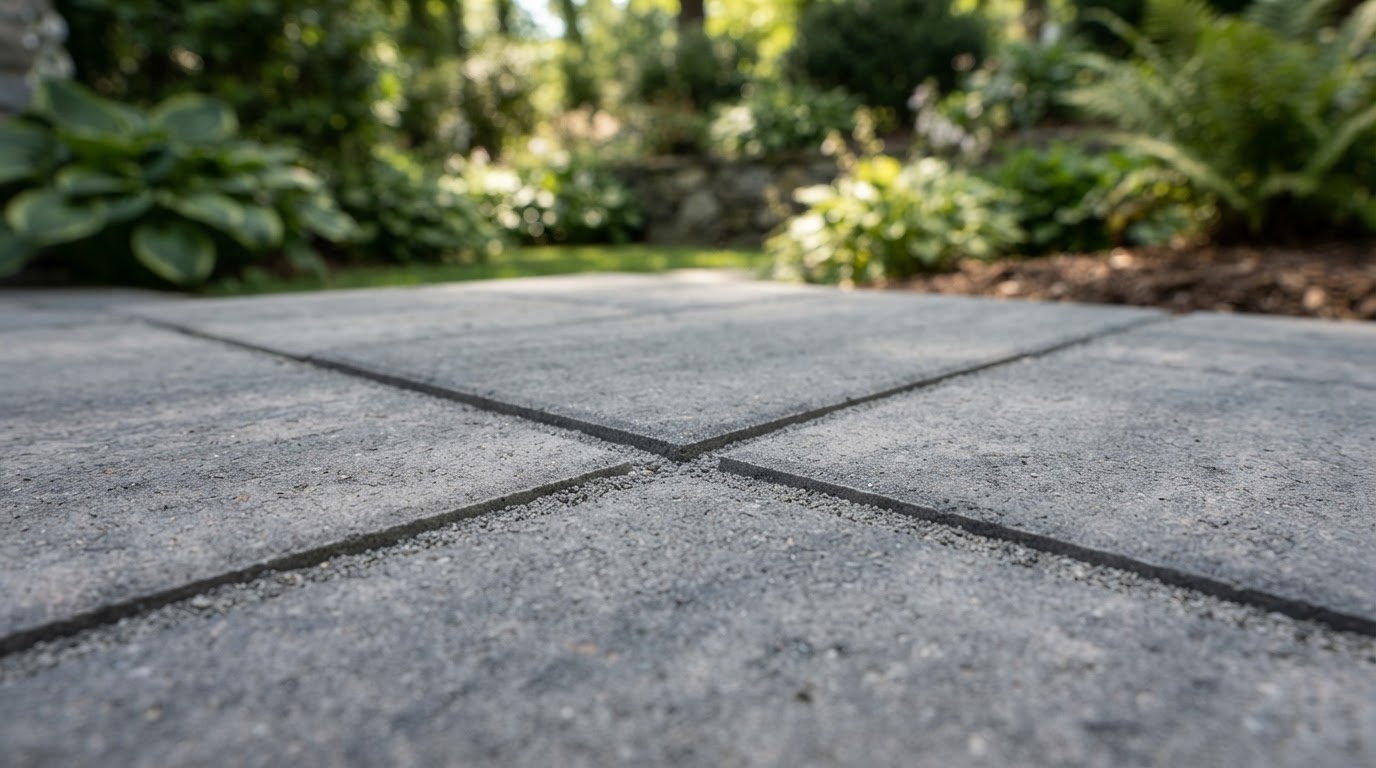
Localized Issue — Repair Candidate
Settlement or damage limited to a section, sound base across the rest of the patio, stable edges, and drainage that is working. Lifting and resetting the affected area often restores the surface without disturbing the whole field.
Systemic Issue — Rebuild Candidate
Widespread movement, failed base across most of the patio, edges that have spread throughout, or drainage problems affecting the entire surface. When the underlying system has failed broadly, surface-level repair usually does not hold.
Where drainage fits in
If water is the cause, surface repair alone is rarely enough. Where runoff or pitch is contributing to the settlement, drainage solutions and patio drainage are part of the repair, not an afterthought. Addressing water movement alongside the surface is what keeps a low spot from returning.
Repair for Established Northeastern Pennsylvania Patios
Many patios in the Scranton area sit on mature properties — older homes, settled grades, and surfaces that have been through years of freeze-thaw. Seasonal moisture and winter conditions are one contributing factor among several; they rarely act alone. A patio that has performed for a decade and now shows a low section is often a good repair candidate, while one that has moved broadly may point to a deeper issue worth a fresh look.
Freeze-Thaw Movement
Cyclic freezing and thawing can shift base material and lift edges — a common contributor to settlement through Northeastern Pennsylvania winters.
Runoff & Grade
Surface water directed at the patio from a higher area can erode the base over time. Drainage is evaluated as part of any repair.
Mature Properties
Established neighborhoods often have patios over settled grades and root zones, where localized movement is a normal part of an aging surface.
Matching Units
For replacement of damaged pieces, matching paver availability affects how seamlessly the repair blends with the existing field.
Not Sure What Your Pavers Are Doing?
Describe where the settlement, shifting, or joint loss is happening and start with an evaluation.
Paver Patio Repair Questions
Related Repair & Restoration
Paver Restoration & Re-Sanding
Joint and surface restoration for aging paver patios.
Paver Sealing
Optional surface protection after repair is complete.
Sunken Paver Repair & Leveling
Focused correction of settled, uneven paver sections.
Paver Patios
New patio design and installation when rebuild is needed.