Walkway & Pathway Installation Scranton
Walkway Installation in Scranton, PA
A walkway is a circulation surface. Its job is to move people reliably between the driveway, the front entry, the patio, the side yard, and the garden — in all seasons, on a grade that may rise or fall across the property. Width, layout, material, and the transitions at each end all follow how the path is actually used. A walkway that looks good but forces an awkward step off the edge or funnels water toward the door has failed its primary purpose.
Across Lackawanna County, walkways also carry winter. Snow is shoveled and plowed across them, freeze-thaw cycles work the joints, and spring runoff tests the grade. That is why a walkway is built like any other paver surface: excavated to a proper depth, compacted in lifts, drained with positive pitch, and restrained at the edges. The visible paver is the last decision, not the first.
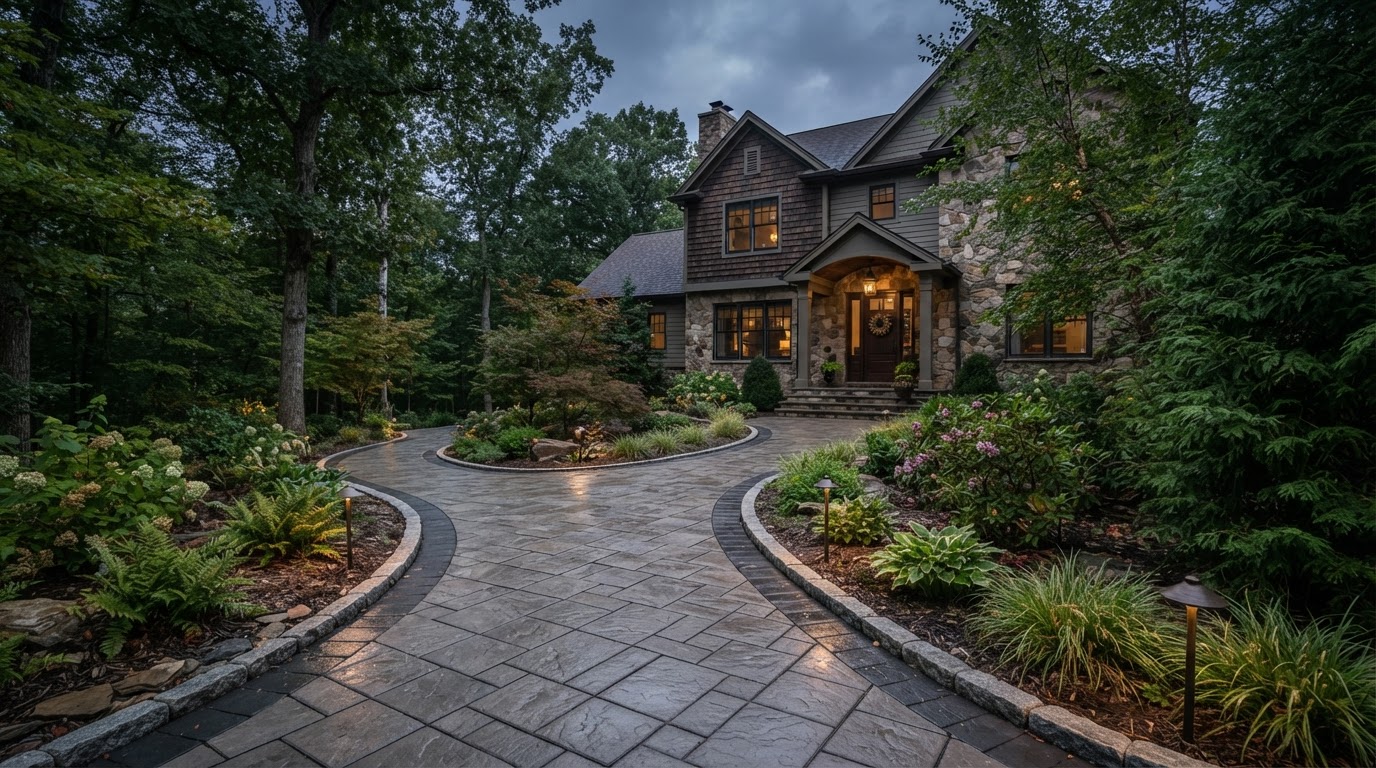
Layout can be straight and architectural or curved and informal. A straight front walk reads clean and direct; a curved garden path softens a landscape and slows the pace. Borders frame the field and define the edge where the path meets lawn or planting. Where the walkway meets a patio or driveway, the material and pattern can continue or transition deliberately.
Plan the Connections First
Driveway · Entry · Patio · Side yard · Garden. A path is defined by where it starts, where it ends, and what it crosses in between.
Paver, Bluestone & Natural Stone Walkway Options
Material sets the character of the path. Concrete pavers offer consistency and broad options; natural stone brings regional texture. The choice is mostly aesthetic — the base and drainage carry the performance. See the full material treatments for concrete pavers, bluestone, and flagstone.
Concrete Pavers
Consistent sizes, tight joints, broad color and texture range. Strong for front entries and high-traffic paths where a clean, architectural look is wanted.
Bluestone
Dimensional Pennsylvania bluestone with natural regional character. Reads premium against Northeast architecture; tight joints on a proper base.
Flagstone
Irregular or dimensional natural flagstone with a more organic, landscape-integrated feel. Suits garden paths and informal circulation.
Planning Walkway Grade, Drainage & Transitions
A walkway's success depends on more than the surface material. Excavation, base preparation, compaction, surface drainage, finished grade, edge restraint, and joint material all decide whether the path stays level through a Northeast winter. Where the path crosses a slope, steps and landings resolve the elevation; where it meets a patio or lawn, the transition is planned so water does not back up against the edge. The paver installation discipline is the same one that protects a walkway.
Excavation & Base
The path is excavated to a depth appropriate to the soil and traffic, then built on compacted aggregate in lifts. A walkway is not a thin layer of pavers on top of soil.
Surface Drainage
Positive pitch sheets water off the surface; surrounding grade carries it to a safe path. A walkway that pools or channels water down its length is a drainage problem disguised as a path.
Edge Restraint & Joints
An edge restraint holds the field together so the pavers do not migrate outward over time. Joint material — polymeric sand where appropriate — stabilizes the surface against washout and weeds.
Steps & Transitions
Where grade changes, steps and landings are integrated with the walkway. The transition to patio, driveway, or lawn is planned at a clean elevation so the path reads as one connected system.
Entry Walkways & Landscape Paths Near Scranton
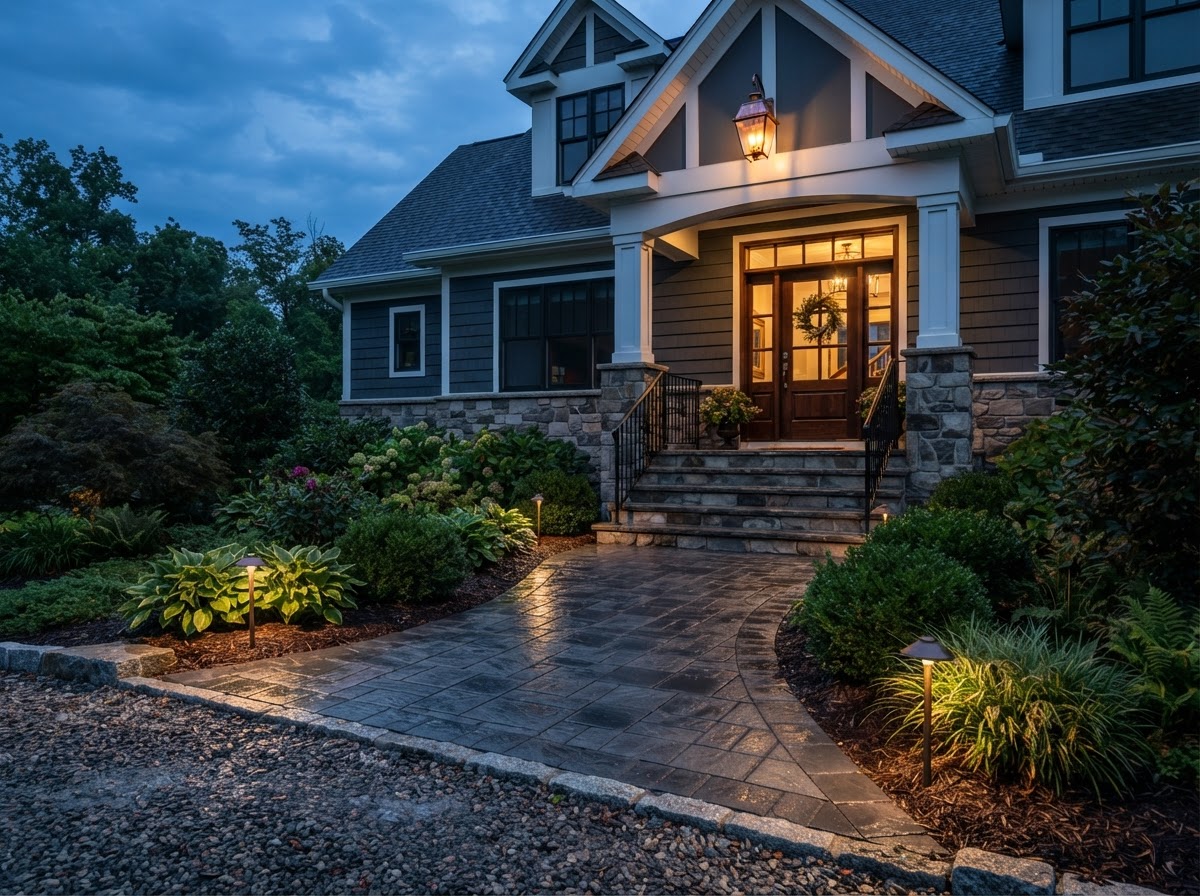
A front entry walkway is the first hardscape most visitors see, and it sets the tone for the property. On established Scranton neighborhoods and Abingtons properties with mature landscaping, the walkway has to coordinate with planting beds, grade, and the architecture — not just run a straight line to the door. A front yard hardscape project often centers on the entry walk.
Secondary paths — to a patio, a side yard, or through a garden — are planned with the broader landscape design so circulation, planting, and lighting work together. Where a path serves an outdoor living area, it connects to the outdoor living plan rather than ending abruptly at the patio edge.
Front Entry
Direct, welcoming path from driveway or curb to the front door, sized for two people and coordinated with steps and lighting.
Side-Yard Access
Practical path connecting front and back yards, often narrow and graded to carry foot traffic and equipment.
Patio Connection
Linking driveway or house to the patio so circulation reads as one connected outdoor environment.
Garden Path
Informal curved path through planting beds, often flagstone or natural stone for a softer landscape feel.
Plan Lighting With the Path
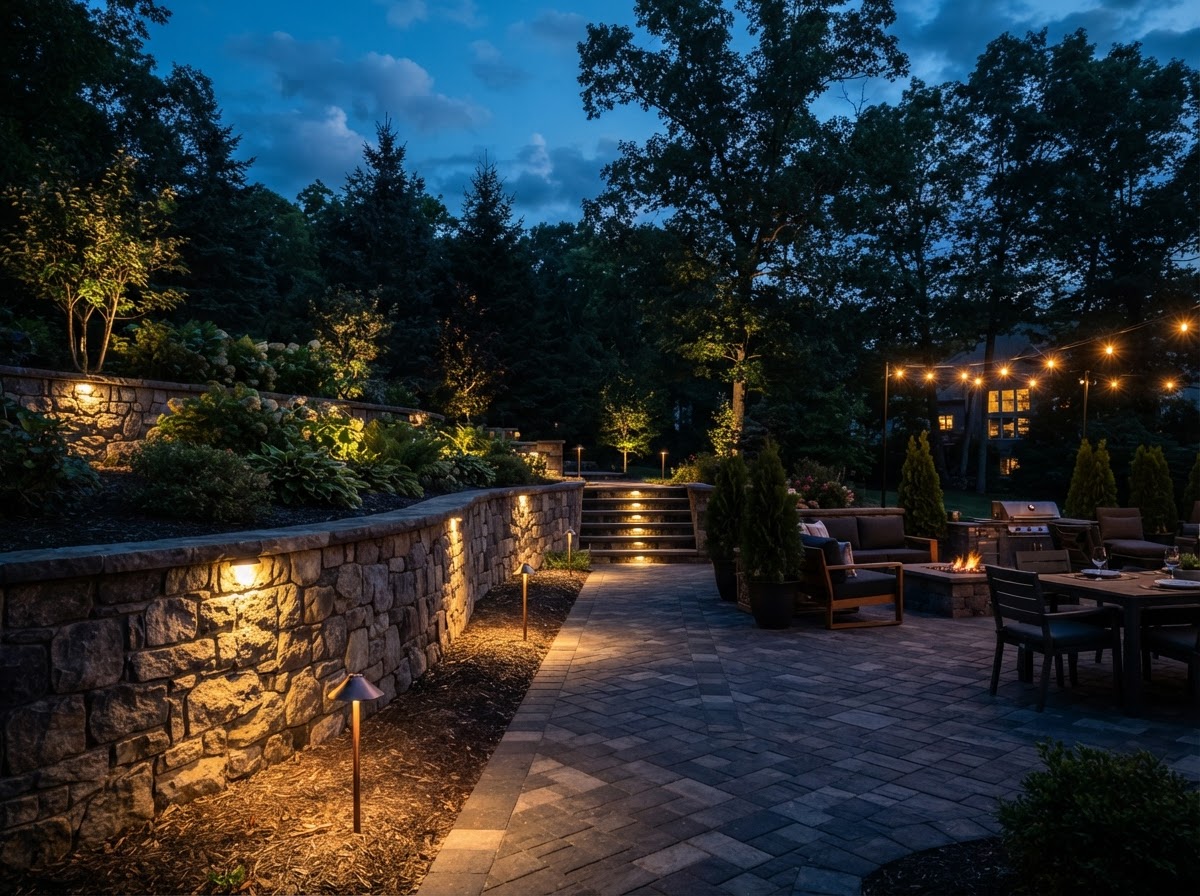
Path and step lighting is far easier to plan with the walkway than to retrofit later. When landscape lighting is part of the layout, the path works at dusk as well as midday.
Planning a New Entry or Garden Path?
Discuss the connection points, grade, material, and lighting you have in mind.
Walkway Installation Questions
Connected Path & Circulation Services
Paver Installation
The base, compaction and edge discipline behind every paver surface.
Paver Steps & Outdoor Stairs
Steps and transitions for sloped walkways and grade changes.
Landscape Lighting
Path, step and accent lighting for evening navigation.
Front Yard & Entryways
Curb-appeal entry walks and front yard hardscape.