Concrete Pavers Scranton
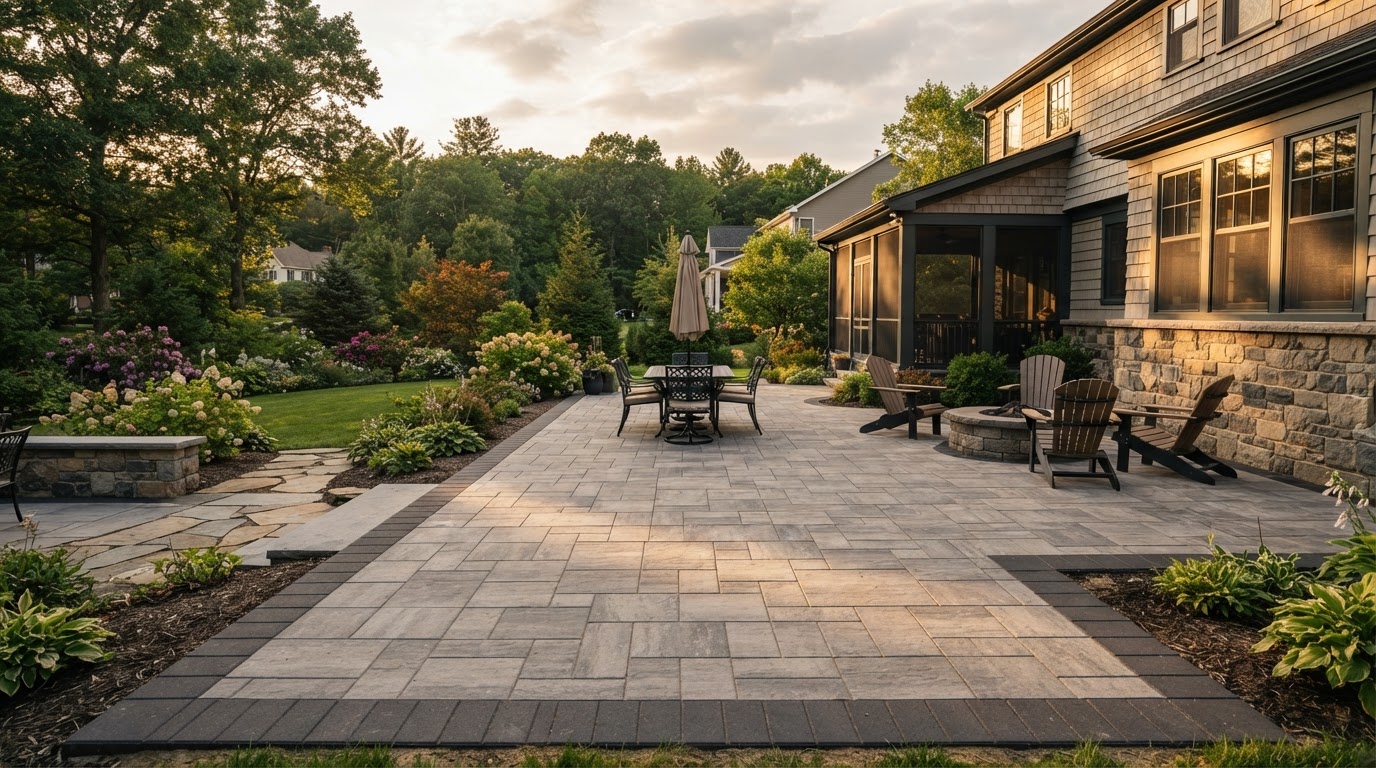
Concrete Paver Installation in Scranton, PA
Concrete pavers are a material system — manufactured units, not a continuous pour. The distinction matters: individual units with joints between them behave differently than a slab. They interlock over a prepared base, they offer design flexibility through patterns and colors, and individual units can be replaced.
This page is about the material system. The installation discipline across applications is on the paver installation page; the patio application on the paver patios page; and the vehicular application on the paver driveways page.
Concrete pavers are not presented here as universally better than poured concrete or natural stone. They are a different material with different character, different installation, and different maintenance. The choice depends on the application and the design.
A Material System
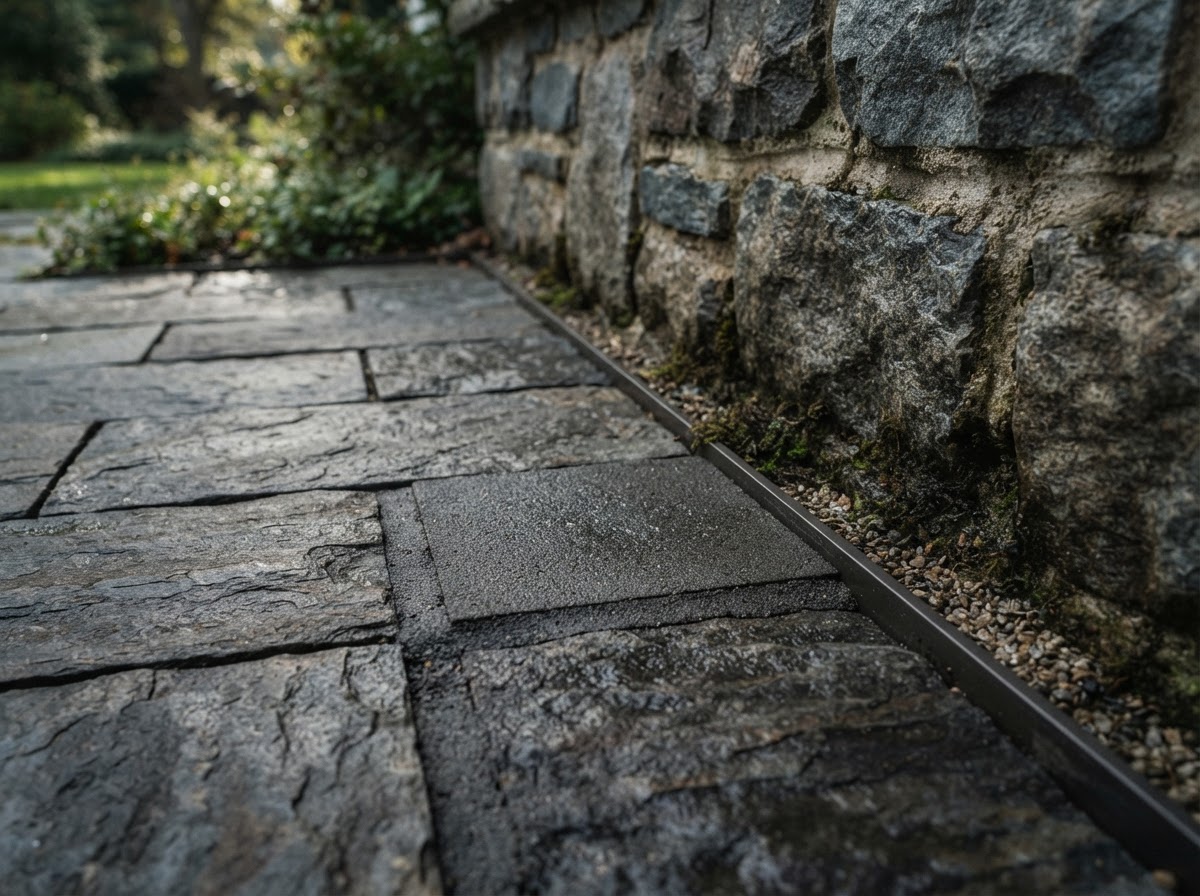
Manufactured units · Controlled sizes · Interlocking · Jointed surface — not a continuous pour.
Paver Sizes, Colors, Textures & Patterns
The manufactured character gives controlled selection — sizes, colors, textures, and patterns chosen for the application and the property.
SURFACE
Controlled texture and color blends.
EDGE
Manufactured edges for clean borders.
JOINT
Consistent joints with polymeric sand.
PATTERN
Modular, herringbone, or decorative layouts.
Modular Sizing
Manufactured in controlled sizes, allowing modular layouts and consistent patterns across the surface.
Color & Texture
A range of color blends and surface textures, from smooth to textured, selected for the property and the surrounding hardscape.
Patterns & Borders
Modular patterns, herringbone, and decorative layouts, with borders and accents to define zones and edges.
Concrete Pavers for Patios, Walkways & Driveways
Concrete pavers are used across applications — patios, walkways, driveways, entries, steps, and pool surrounds depending on the product and application. Each application changes the installation considerations — a driveway is not built like a patio.
What goes beneath the surface matters as much as the paver. The excavation, the aggregate base, the compaction, the finished grade, the edge restraint, and the joint material all influence how the surface performs over time. The visible paver is only the top layer of a built system.
The edge restraint and the joint material hold the system. Pavers interlock, but without edge restraint and a properly compacted base, the surface shifts. Where permeable pavers or steps are part of the project, the system is adapted for the application.
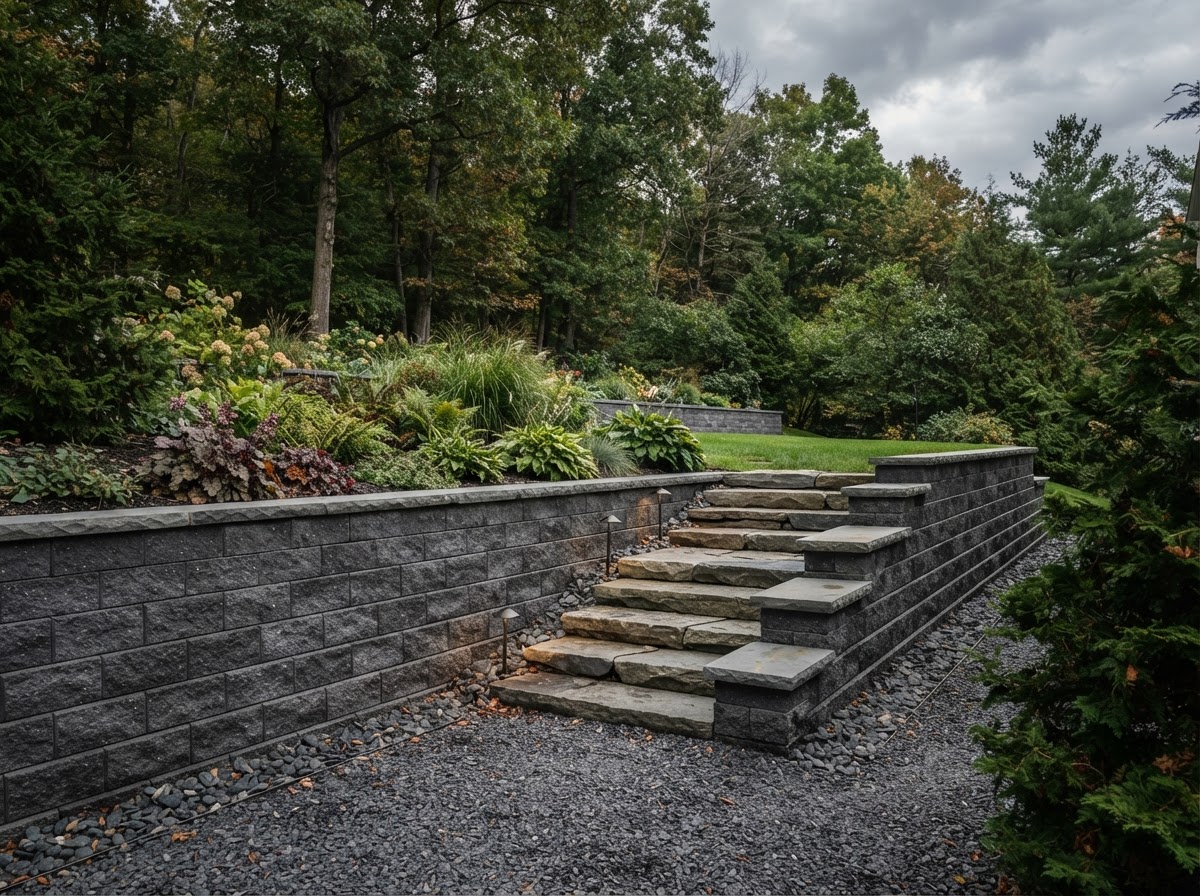
What Goes Beneath
- • Excavation and aggregate base
- • Compaction and finished grade
- • Edge restraint
- • Joint material and polymeric sand
- • Application-specific requirements
Concrete Pavers for Northeastern Pennsylvania Properties
Concrete pavers in Northeastern Pennsylvania face freeze-thaw, snow, and seasonal use. The base preparation, the drainage, and the material selection are made for that exposure — the surface is built to sit through the winter and perform when the season returns. The paver alone does not determine the performance; the build does.
Where pavers need repair or restoration, individual units can be lifted and reset — see paver patio repair and paver restoration. Long-term surface care is covered under paver sealing.
Manufactured Units
Individual pavers, not a continuous slab.
Design Flexibility
Patterns, colors, textures, and borders.
Repairability
Individual units can be replaced.
Climate Build
Base and drainage for freeze-thaw exposure.
Concrete Pavers vs Poured Concrete
Concrete pavers are individual units with a jointed surface; poured concrete is a continuous slab. Pavers offer design flexibility and individual-unit replacement; poured concrete offers a continuous surface. Neither is universally better — the choice depends on the application, the design, and the property.
Exploring Paver Options?
Discuss the sizes, colors, patterns, base, and application for your paver project.
Concrete Paver Questions
Build With Concrete Pavers From These