Permeable Paver Installation Scranton
How Permeable Paver Systems Manage Water
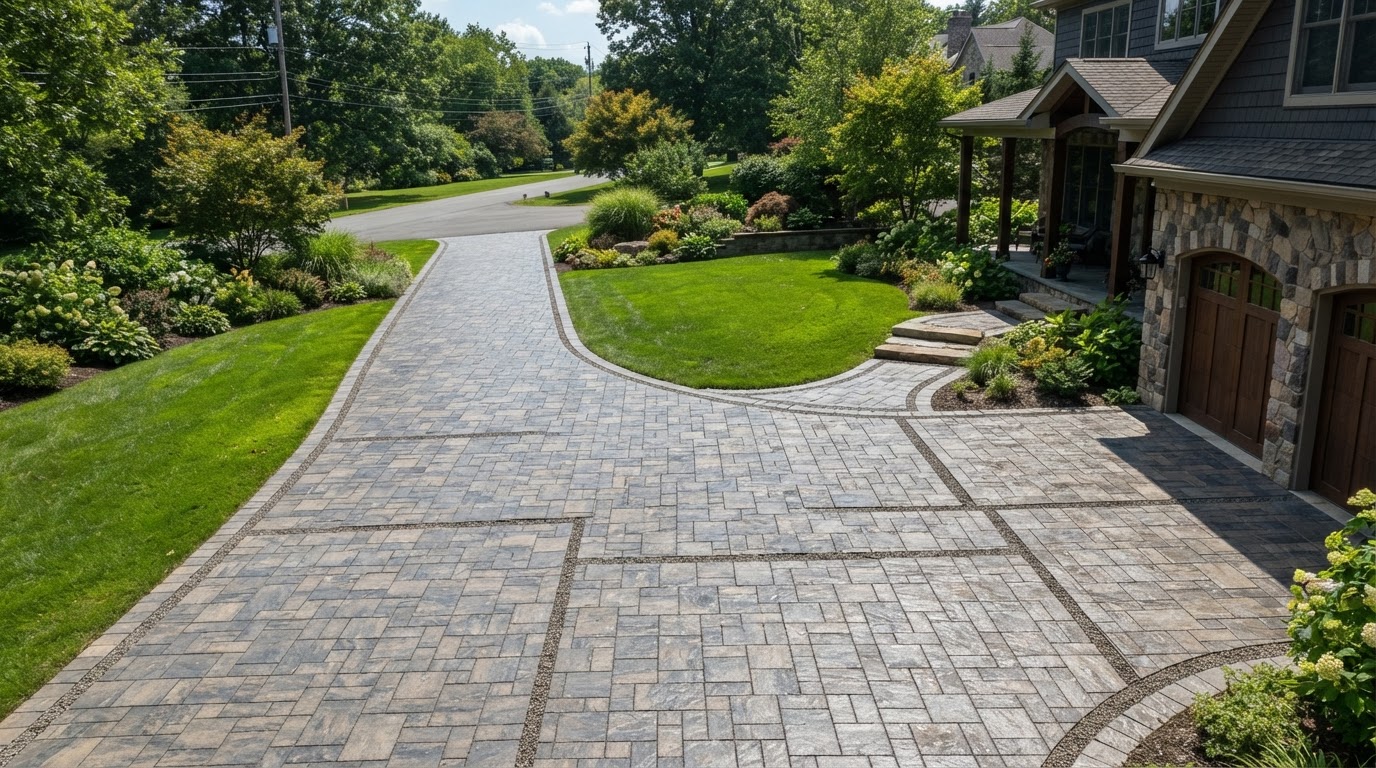
The defining feature of a permeable system is that water is supposed to go through it, not just off it. The surface uses intentionally wider joints or openings filled with small aggregate, and below that sits an open-graded stone layer that holds water and lets it move. In the right conditions, water that would run off a standard surface instead enters the pavement and moves down.
That does not mean water disappears instantly, and it does not mean permeable pavers solve every drainage issue. The system depends on the soil beneath being able to accept water, on the storage layer being sized for the runoff, and on the joints staying open. When any of those conditions change, performance changes.
This is why a permeable system is selected for a site, not just specified. The drainage goal, the soil, and the application — patio, walkway, or driveway — all determine whether permeable pavers are the right fit and how the assembly is built.
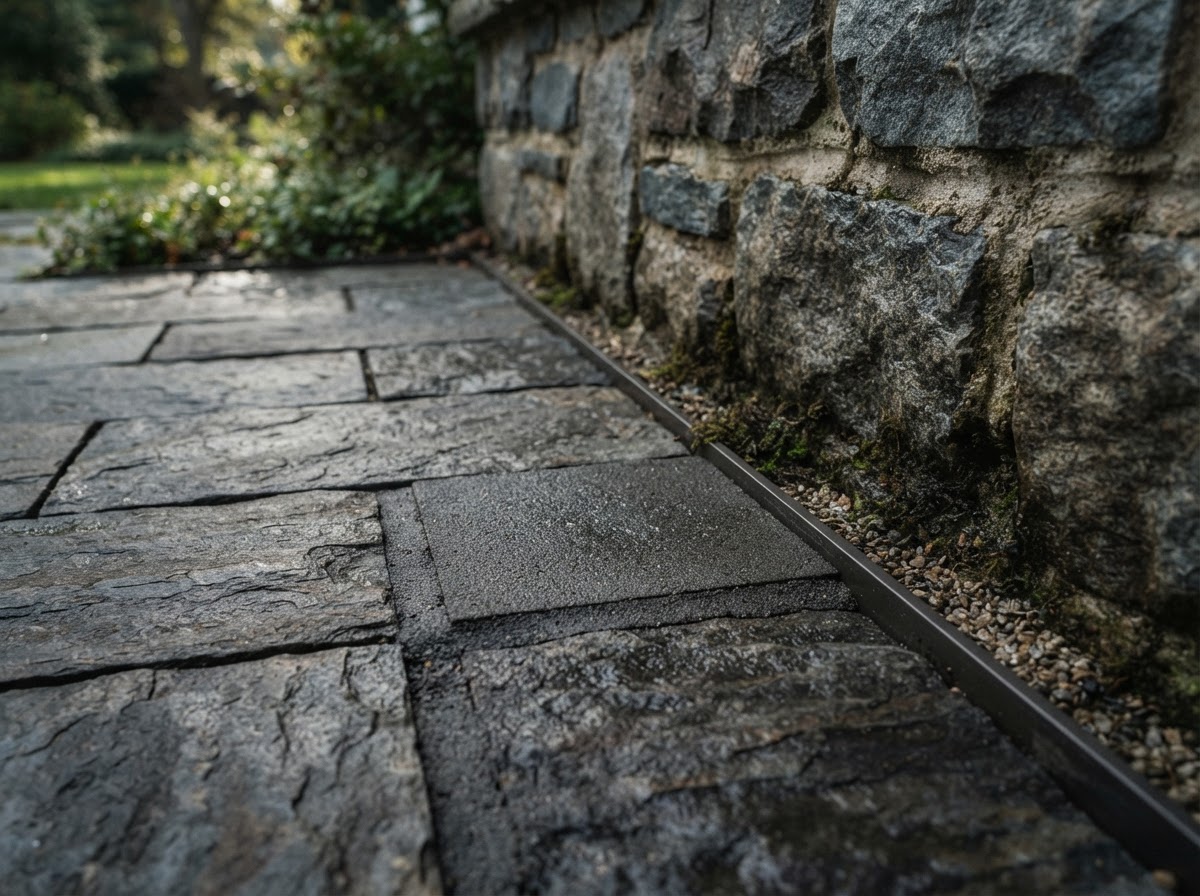
A system, not a surface
Surface, joints, bedding, and base are all designed together to move water.
Permeable vs Standard Interlocking Pavers
The distinction is in how each system is built to handle water, not just in the paver on top. A standard paver driveway and a permeable paver driveway can look similar at a glance — but the joints, the bedding, and the base underneath are completely different assemblies.
Standard Interlocking Pavers
Surface: individual units with a conventional tight joint system.
Primary drainage approach: designed around surface drainage and grade — water runs off the surface toward drainage points and the surrounding landscape.
Permeable Paver System
Surface: units and joints designed as part of a permeable pavement assembly with wider aggregate-filled openings.
Primary water-management approach: allows water to enter the pavement system through designed openings and joints into an aggregate storage layer below.
The exact assembly depends on the product, the site, the soil, the loading, the water-management goal, and applicable requirements.
What Is Beneath a Permeable Paver Surface?
Below the surface, a permeable system typically includes an open-graded aggregate bedding layer and a deeper storage layer of clean stone designed to hold water and let it move slowly. The depth and gradation of those layers depend on the product, the soil, the loading, and how much water the system is designed to handle. There is no universal cross-section — the assembly is designed for the site.
Overflow planning matters too. In a large storm, the storage layer can fill, so the system needs a way for excess water to move rather than ponding on the surface. That is part of the design, not an afterthought.

Where permeable pavers may be used
- Patios where water management is part of the goal.
- Walkways and entry areas with runoff considerations.
- Driveways built with systems rated for vehicle loading.
- Parking and entry areas where appropriate to the product and site.
Site conditions that shape the design
- Soil and subgrade ability to accept water.
- How much runoff the system is being asked to handle.
- Loading — pedestrian vs vehicular — for the application.
- Maintenance access and sediment exposure at the surface.
What permeable pavers are not
They do not eliminate all runoff, prevent all flooding, or remove the need for drainage planning. They are one water-management approach that works when the system is selected and built for the site — and when the joints and base are maintained so water can keep moving through.
Permeable Pavers for Northeastern Pennsylvania
Northeastern Pennsylvania's mix of spring storms, snowmelt, and established lots with limited drainage outlets makes permeable pavement a relevant option for some properties. Because water moves through the surface instead of running off, a permeable driveway or patio can reduce the runoff that would otherwise sheet across a yard or collect at a low edge — when the soil and system allow it. Freeze-thaw performance still depends on correct installation and material selection.
Spring Storms
Heavy rain events make runoff management a real concern on many Scranton lots.
Snowmelt
Slow snowmelt can move through a permeable surface rather than sheeting off it.
Limited Outlets
Older lots with few drainage exits can benefit from managing water at the surface.
Freeze-Thaw
Correct base and material selection keep the system working through cyclic freezing.
Considering a Permeable Paver System?
Describe the site, the application, and the water you're trying to manage — and start with whether a permeable system fits the conditions.
Permeable Paver Questions
Related Paver & Drainage Services
Paver Installation
Standard interlocking paver systems for patios, walks and driveways.
Concrete Pavers
Manufactured paver units in modular sizes, colors and patterns.
Drainage Solutions
Broader property drainage and runoff management.
Patio Drainage Solutions
Addressing water pooling on and around paver patios.