Paver Restoration & Re-Sanding Scranton
What Happens When Paver Joint Sand Is Lost?
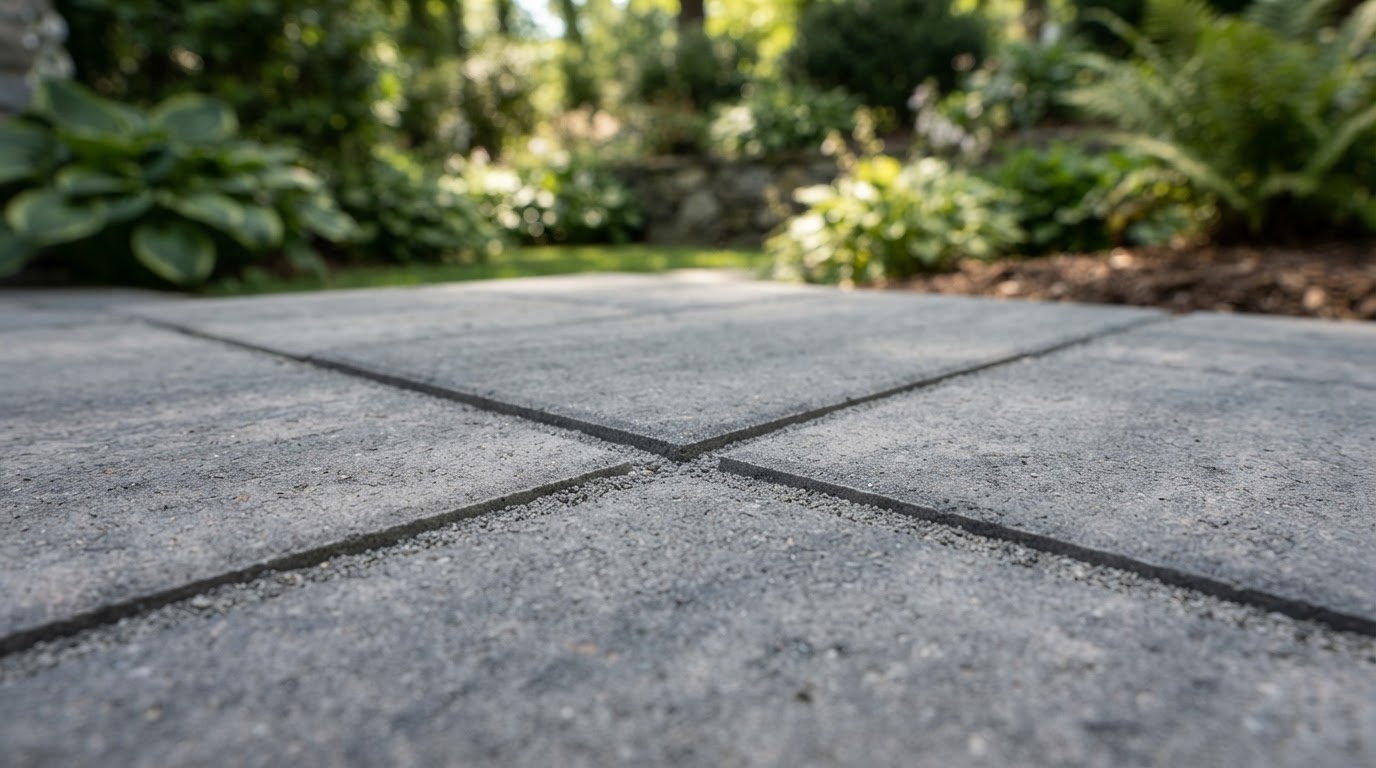
Joints do more than look neat. The sand between pavers locks the field together laterally, keeps units from rocking, and slows water and seed from moving into the base. When that material erodes, the patio loses that support — pavers shift more easily, edges spread, and weed and ant activity become more common.
Joint loss is usually gradual. Rain, freeze-thaw, and surface runoff work material out over years; a heavy power washing can accelerate it. The surface may still look largely fine while the joints are quietly emptying, which is why restoration is often a maintenance step taken before the surface has visibly deteriorated.
Restoration vs Repair
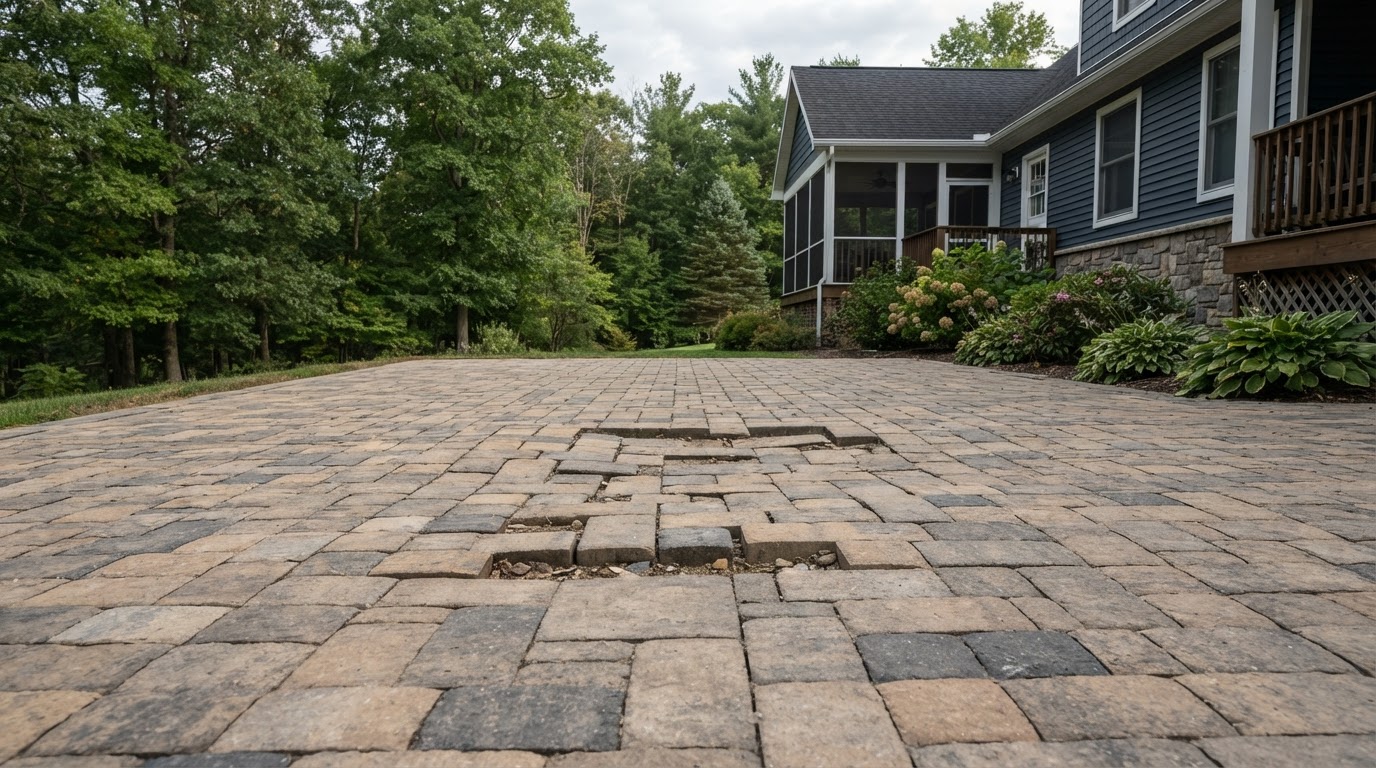
Restoration addresses surface and joint condition. Repair addresses settlement, uneven elevations, and base issues. If a patio is significantly uneven, re-sanding alone will not correct the underlying problem.
Re-Sanding Existing Paver Patios & Walkways
Restoration starts with preparation, not with the new sand. Old material and debris have to be cleared from the joints so the fresh fill has somewhere to go and can bind properly. Skipping that step is why re-sanding often fails — new sand on top of old, broken material does not lock.
Clean & Prepare
Remove old joint material, debris, and organic growth from the joints and surface.
Inspect Condition
Confirm pavers are sound and reasonably level before refilling.
Refill Joints
Sweep in fresh joint sand — often polymeric — to fill joints fully.
Activate & Stabilize
Activate the joint material and restore the tight, stabilized field.
Preparing Existing Pavers for Restoration
Polymeric sand is joint sand blended with a binder that activates with water to form a more stable joint fill. It can help stabilize joints and reduce certain maintenance issues when properly selected and installed. It is not a permanent fix — it does not make pavers waterproof, permanently lock every unit, or eliminate weeds and insects forever. Performance depends on the product, the joint preparation, and the conditions the surface faces.
What It Can Do
Stabilize joints, slow joint erosion, reduce weed and ant activity, and improve the finished appearance of the field when properly installed.
What It Cannot Do
It does not make pavers waterproof, permanently lock all pavers, or eliminate weeds and insects forever. It is a maintenance material, not a structural repair.
When Restoration Is Not Enough
If pavers are uneven, loose, or settling, re-sanding alone will not correct the underlying issue — and joint material in an unstable area tends not to hold. In that case, paver patio repair comes first, then sealing and re-sanding follow once the surface is sound.
Joint Wear in Northeastern Pennsylvania
Seasonal moisture, snowmelt, and freeze-thaw cycles across the Scranton area work joint material out of patios and walkways over time. Older installations and surfaces in wetter, lower-lying settings tend to need restoration sooner than sheltered or newer ones. Climate is one factor among several — traffic, original installation quality, and drainage all shape how fast joints erode.
Freeze-Thaw
Cyclic freezing expands moisture in joints and helps work material loose through winter.
Surface Runoff
Water moving across the patio carries joint sand with it, especially on pitched surfaces.
Older Patios
Established surfaces have simply had more seasons of exposure to erode joints gradually.
Wet Settings
Patios in low or poorly drained areas face more joint erosion than sheltered, well-drained ones.
Are Your Paver Joints Emptying Out?
Describe the surface and joint condition and start with a restoration evaluation.
Paver Restoration Questions
Related Repair & Maintenance
Paver Patio Repair
Correcting settlement and loose units before restoration.
Paver Sealing
Surface protection applied after re-sanding is complete.
Sunken Paver Repair & Leveling
Elevation correction for settled paver sections.
Concrete Pavers
Material context for interlocking paver systems.