Natural Stone Patios Scranton
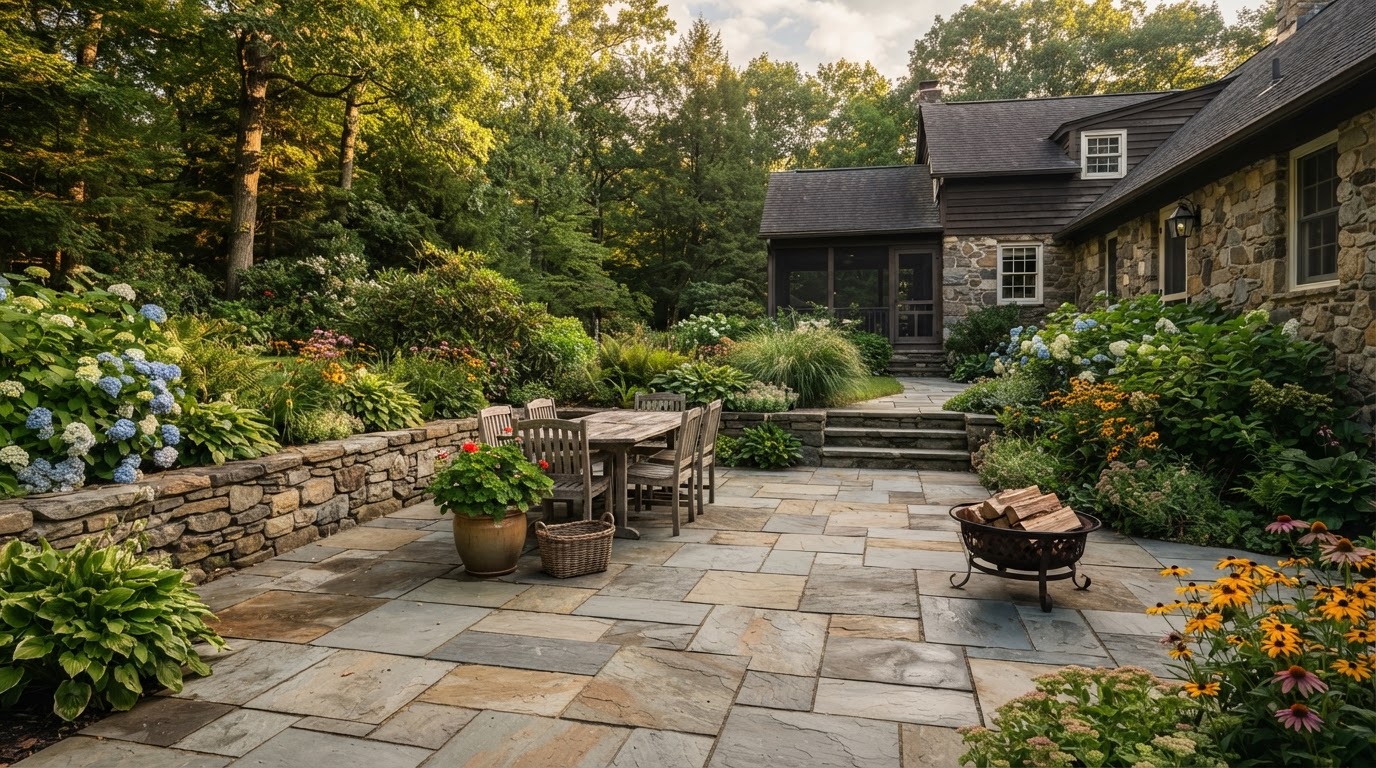
Natural Stone Patio Installation in Scranton, PA
This is the broader natural stone category page. Natural stone is quarried stone — material cut or split from the earth, with color, texture, and surface character that vary from piece to piece. The two most common regional expressions get their own pages: bluestone and flagstone.
The difference from a manufactured paver is the variation. A concrete paver is produced in controlled sizes and consistent colors; natural stone carries the variation of the material itself. That gives a stone patio a different character — organic, tactile, and tied to the landscape rather than modular and repeatable.
Natural stone is not presented here as universally superior. It is a different material with different visual character, different installation considerations, and different maintenance. The choice between stone and paver depends on the property, the design, and the homeowner — both are legitimate patio surfaces.
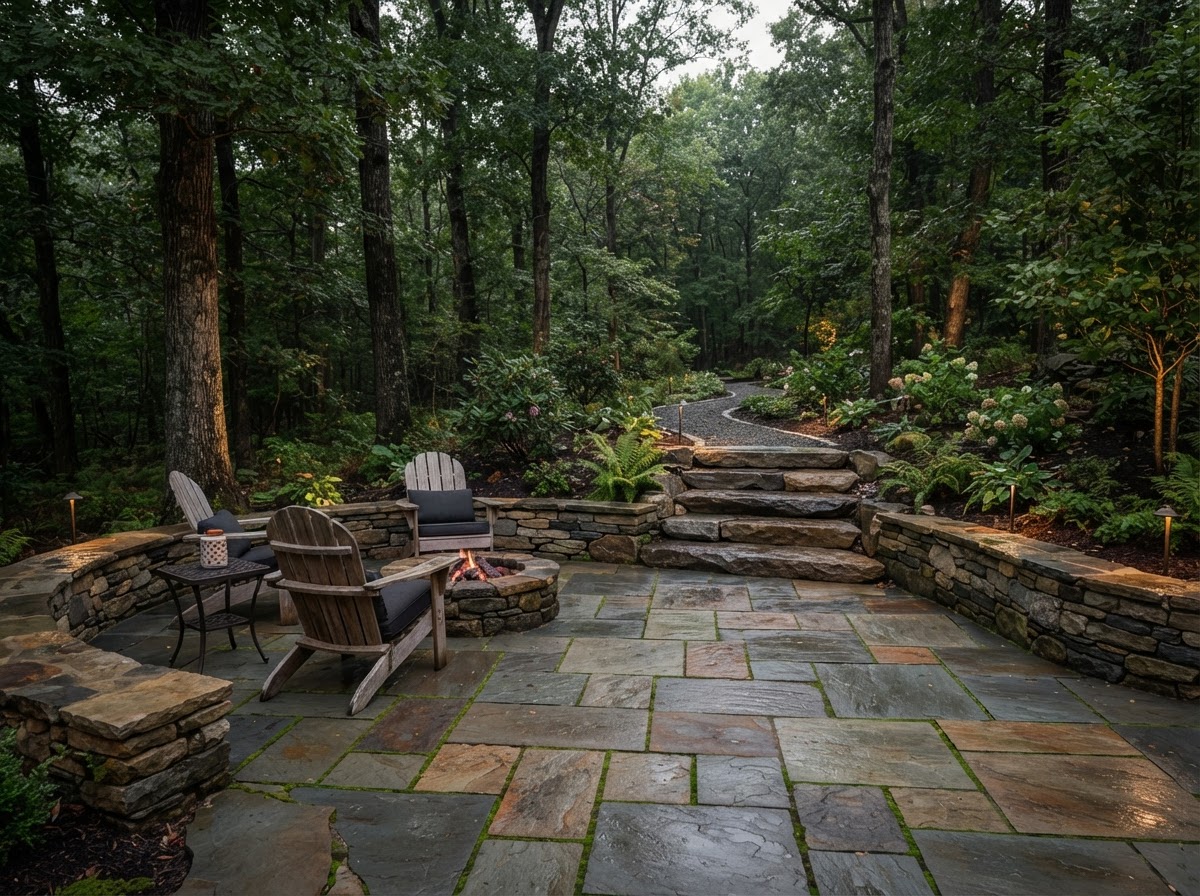
Quarried Material
Variation · Texture · Organic character · Landscape relationship — not a manufactured, consistent surface.
Why Natural Stone Creates a Different Patio Character
The character comes from the material itself — variation that a manufactured paver is designed to control.
SURFACE
Natural material variation, piece to piece.
EDGE
Cut or natural character depending on stone.
JOINT
Layout-dependent — tight or wider.
PATTERN
Rectangular, irregular, or mixed layouts.
Color Variation
Color shifts from piece to piece within the same stone — blue-grays, earth tones, and mineral variation that a manufactured paver is made to avoid.
Texture & Surface
Surface character ranges from natural cleft to thermal finishes, each reading differently and suited to different designs.
Layout Character
Rectangular patterns, irregular layouts, or mixed formats — the stone and the layout together define the patio's character.
Planning the Base, Joints, Grade & Drainage
A natural stone patio depends on what is beneath it as much as the stone on top. The base preparation, the finished grade, the drainage, and the joint material all influence how the surface performs over time. The visible stone is only the top layer of a built system.
The joints are part of the design. A rectangular stone layout may have tight, consistent joints; an irregular layout may have wider, more varied joints. The joint character is a design decision, not just a byproduct — it changes how the patio reads and how it drains.
Drainage is planned with the base and the grade. The surface pitch and the provisions beneath move water away from the patio, and where the patio connects to walls or walkways, the grade transitions are coordinated.
The Build Beneath
- • Base preparation and compaction
- • Finished grade and surface pitch
- • Drainage provisions
- • Joint character as a design decision
- • Transitions to walls and walkways
Integrating Natural Stone With Scranton Landscapes
Natural stone reads tied to the landscape — its variation and texture sit naturally against mature Northeast planting, stone walls, and the region's residential architecture. On Scranton properties, a stone patio often connects to walls, steps, and walkways so the material carries through the yard.
The stone is selected for the property and the landscape design, and laid out with the surrounding hardscape and planting. The goal is a patio that belongs to the property, not a surface dropped onto it.
Material Variation
Color and texture differ from piece to piece.
Landscape Ties
Reads naturally against mature planting and walls.
Through the Yard
Stone carries into steps, walls, and walkways.
Freeze-Thaw
Base and drainage built for Northeast climate.
Exploring a Natural Stone Patio?
Natural stone is a different material with a different character — planned with the base, the joints, and the landscape so it belongs to the property.
Exploring a Natural Stone Patio?
Discuss the stone, the layout, the base, and the landscape for your patio.
Natural Stone Patio Questions
Build a Natural Stone Patio From These