Retaining Wall Repair Scranton
Signs a Retaining Wall May Need Attention
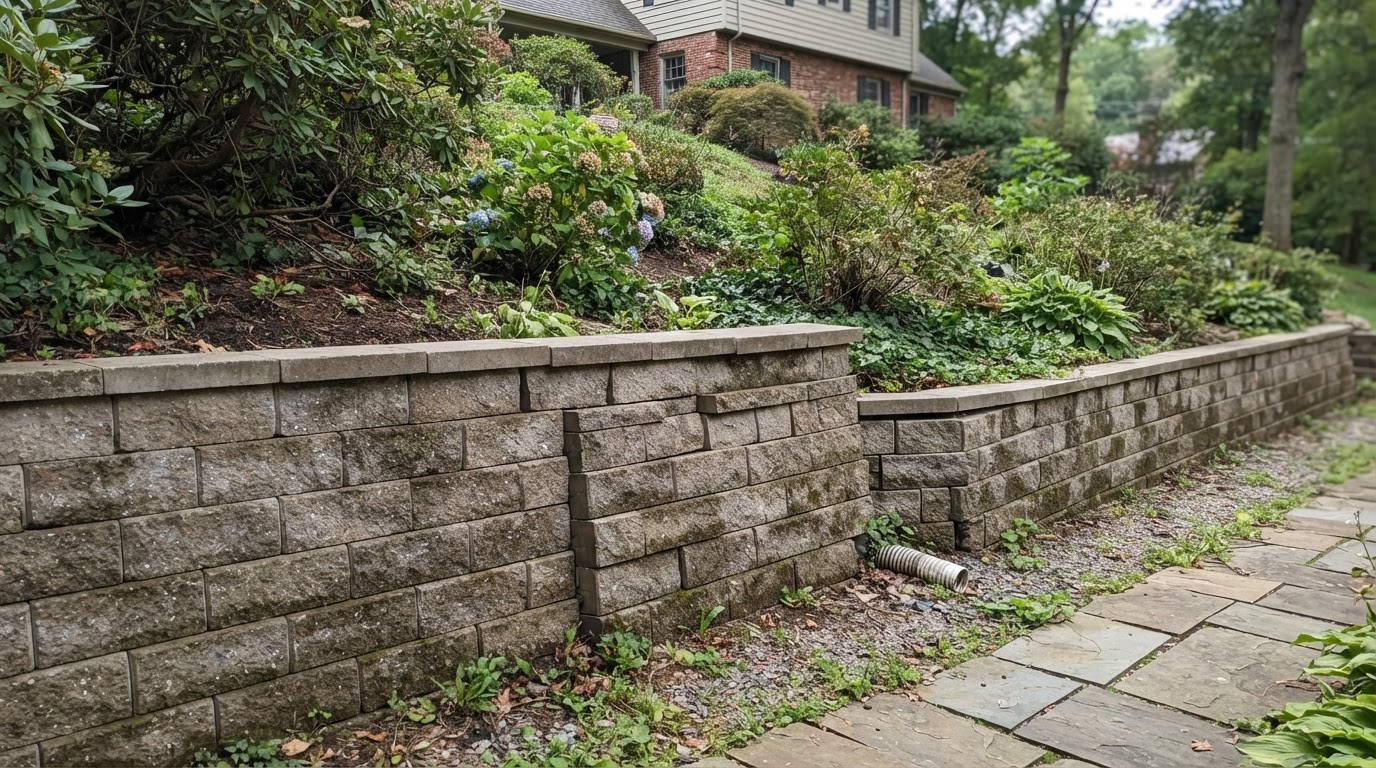
Retaining walls rarely fail without warning. A slight lean, a bulging course, a separating cap, or water collecting at the base are all early signals that the forces on the wall have changed. Because these symptoms can share more than one cause, the wall is evaluated before a repair path is proposed — not diagnosed from appearance alone.
Movement is not something to wait on. A wall that is already leaning or bulging is under more stress than it was designed for, and the longer that stress builds, the fewer the repair options become.
Leaning
The wall face tilting outward from the soil it retains.
Bulging
A section of the face bowing outward under pressure.
Course Separation
Gaps opening between block courses or units.
Settlement
The wall or cap dropping or sinking out of alignment.
Water at Base
Runoff or seepage pooling behind or at the wall base.
Damaged Units
Cracked, spalled, or deteriorated individual blocks.
Why Retaining Walls Move, Lean or Bulge
Most wall movement comes down to forces exceeding what the wall system can hold — and water is the most common reason that happens. Pressure builds behind a wall when drainage cannot release it, and that pressure pushes the face outward. Base conditions, backfill, grade, loading, and the age of the wall system all play a role, and more than one factor is often involved.
Water Pressure
Inadequate drainage lets pressure build behind the wall.
Base Conditions
An insufficient or settled base lets the wall shift.
Backfill
Heavy or water-holding backfill increases the load on the wall.
Grade & Runoff
Water directed at the wall from above adds pressure.
Loading
Surcharge from slope, driveway, or structure exceeds design.
Wall System Age
Older systems weather and lose capacity over time.
Why Drainage Matters Behind a Retaining Wall
Water accumulating behind a retaining wall increases pressure and contributes to performance problems, so drainage is considered as part of wall planning and repair — not as an afterthought. Drainage aggregate, water movement, surface runoff, and finished grade all shape how water behaves behind the wall. Where drainage has failed, repairing the wall without addressing it usually means the movement returns.
Localized Repair May Be Considered When…
- The issue is limited to a section of the wall.
- Individual units are damaged but the wall is otherwise stable.
- Settlement is localized, not widespread.
- The larger wall system remains suitable.
More Extensive Reconstruction May Need Consideration When…
- Movement is widespread across the wall.
- Wall alignment has substantially changed.
- Drainage or base issues affect a larger area.
- The existing system cannot be corrected through localized repair.
Larger or structurally significant walls
Taller walls, walls under heavy loading, or walls with significant movement may require consideration of wall height, surcharge, slope, soil and site conditions, drainage, wall system requirements, local regulations, and engineering where applicable. This page stays homeowner-focused and does not provide universal reinforcement or drainage dimensions — those depend on the specific project.
Wall Conditions in Northeastern Pennsylvania
Sloped properties, freeze-thaw cycles, and seasonal moisture across the Scranton area put retaining walls under real stress. Hillside lots in and around Lackawanna County rely on walls to hold grade, and the combination of winter water and spring runoff means drainage behind those walls matters more here than in milder climates. Many of the walls that need repair in this region trace back to water rather than original construction alone.
Sloped Lots
Hillside properties depend on walls to manage grade and create usable space.
Freeze-Thaw
Cyclic freezing expands moisture in soil and adds pressure behind walls.
Spring Runoff
Snowmelt and spring rain concentrate water against walls without drainage.
Mature Walls
Older wall systems in established neighborhoods show their age under these loads.
Concerned About an Existing Retaining Wall?
Describe the movement, drainage, or grade you are seeing and start with an evaluation.
Retaining Wall Repair Questions
Related Wall & Site Services
Retaining Wall Installation
New wall construction when rebuild is the better path.
Boulder Retaining Walls
Natural-stone alternative for slope and grade projects.
Drainage Solutions
Correcting water behind and around retaining walls.
Yard Grading & Leveling
Grade correction that affects wall performance.