Boulder Retaining Walls Scranton
Using Natural Stone to Work With Grade Changes
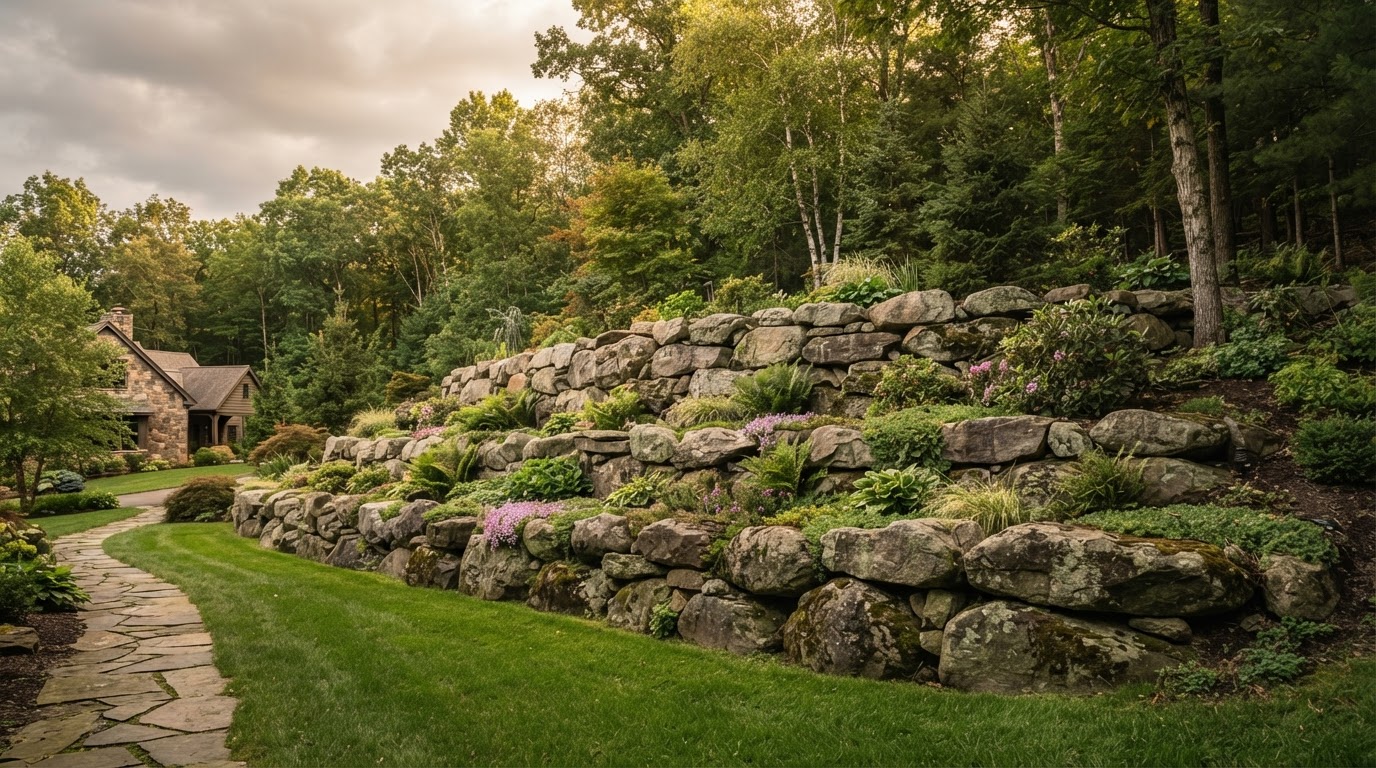
Boulders bring a different character than manufactured block. Each stone is a different size, face, and color, so the wall is assembled stone by stone rather than course by course. That irregularity is the point — it lets the wall blend into a planted slope or a wooded edge the way a clean architectural block wall cannot. On many sloped properties across Lackawanna County, a boulder wall reads less like infrastructure and more like the land itself.
The trade-off is control. Because the stone varies, the wall's alignment, batter, and contact between stones depend on careful selection and placement — there is no uniform unit locking into the next. Stone scale has to match the grade it holds: a small decorative rock will not perform the way a wall-sized boulder will, and the available stone shapes a large part of how the finished wall looks and behaves.
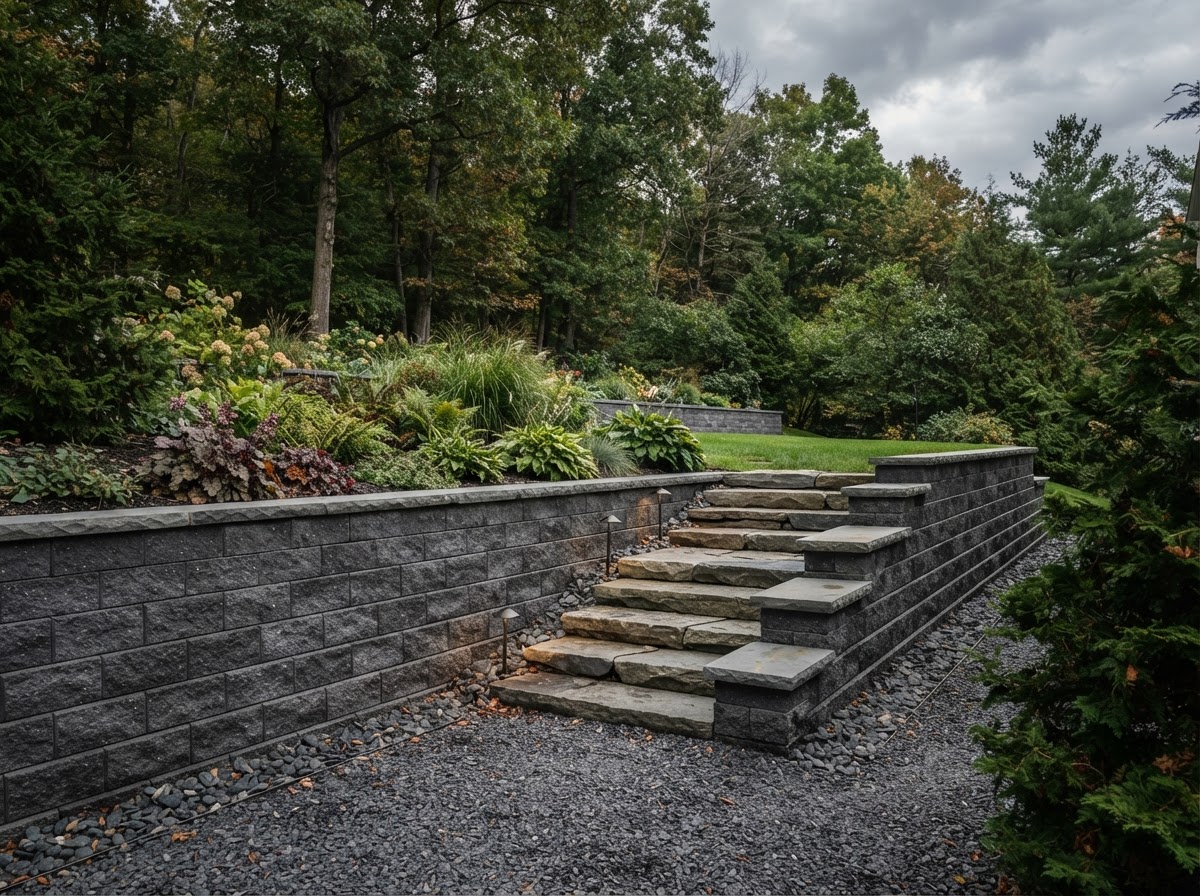
Where a clean, structured look or a taller structural wall is the goal, a segmental block retaining wall may be the better fit. Boulder walls sit at the more naturalistic end of the spectrum, and the choice usually comes down to the character of the property and how the wall needs to perform.
Mass over connection
Boulders hold grade through weight and placement, not mechanical interlock.
Boulder Size, Shape & Landscape Character
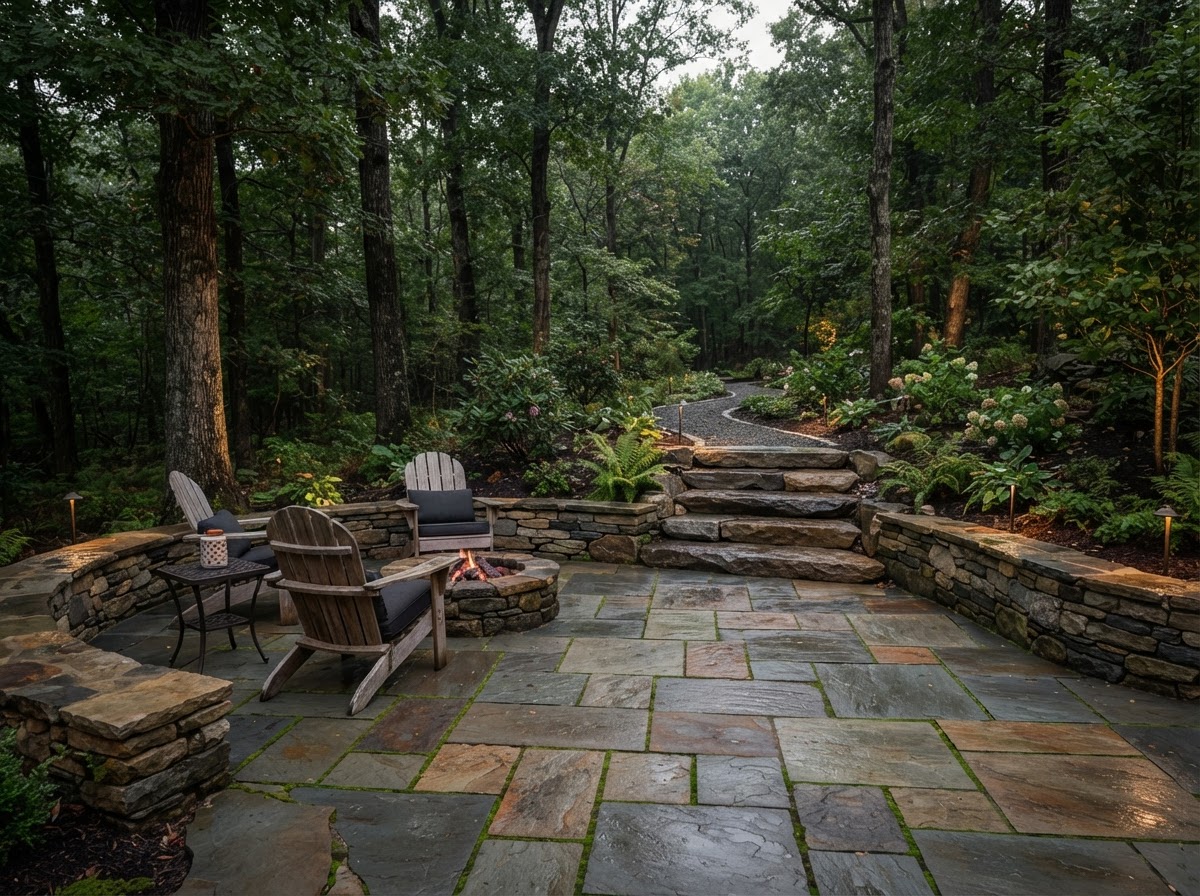
Because no two boulders are alike, the wall is planned around the stone that is actually available — its scale, shape, face, and color range. A wall built from rounded fieldstone reads differently than one built from angular quarried stone, and the stone chosen should suit both the grade it holds and the landscape around it. Terracing, planting pockets, and the way the wall meets the lawn all flow from that material selection.
Stone Scale
Boulder size must suit the grade it holds — too small and it will not perform.
Natural Variation
Color, texture and shape vary stone to stone; that variation is the character.
Wall Alignment
Placement and batter are set stone by stone rather than course by course.
Terracing
Steep slopes can be broken into stepped terraces instead of one tall wall.
Planting Pockets
Gaps and crevices can hold soil and plantings that blend wall into landscape.
Step Integration
Flat stones can serve as treads connecting upper and lower elevations.
Planning Drainage & Grade Around a Boulder Wall
A boulder wall still holds back soil and water, so drainage is planned with the wall — not assumed away by the stone's mass. Surface runoff, water moving downhill, and the finished grade above and below the wall all shape how the wall performs over time. Where water is directed at the wall with no way past or through it, pressure builds the same way it does behind any retaining structure.
That is why boulder wall work is often paired with drainage planning and grade correction above and below the wall. The wall, the slope, and the water are treated as one system.
Site-specific, not universal
Wall height, slope, soil and site conditions, loading, stone characteristics, drainage, and site access all factor into how a boulder wall is built. This page does not publish universal embedment depths, stone weights, or base dimensions — those depend on the specific project and the stone available.
Larger or structurally significant walls
Taller walls, walls under heavy loading, or walls with significant retained grade may require consideration of height, surcharge, slope, soil, drainage, local regulations, and engineering where applicable. Planning stays at a homeowner level here — no one-size-fits-all structural specification.
A natural wall is still a wall
A boulder wall may look like part of the landscape, but it is doing structural work. Treating it as purely decorative — or skipping drainage because the stone "breathes" — is how naturalistic walls still end up moving. Drainage and grade are planned with the same care as any retaining wall.
Boulder Walls for Sloped Northeastern Pennsylvania Properties
Sloped lots, mature tree cover, and freeze-thaw cycles make Northeastern Pennsylvania a natural fit for boulder wall work. Hillside properties around Scranton often need to hold grade while blending into wooded or planted settings, and large natural stone does both at once. Spring runoff and winter moisture mean drainage behind these walls matters as much here as anywhere — a natural-looking wall that traps water will still move over time.
Sloped Lots
Hillside properties use boulder walls to terrace grade and create usable space.
Wooded Edges
Natural stone blends into mature tree lines better than manufactured block.
Freeze-Thaw
Dense, durable stone resists the cyclic freezing that stresses wall systems.
Spring Runoff
Snowmelt concentrates water against hillside walls, so drainage stays essential.
Considering a Natural Stone Wall for a Slope?
Describe the grade change, the slope, and the look you want — and start with how the wall, drainage, and landscape should work together.
Boulder Retaining Wall Questions
Related Wall & Site Services
Retaining Wall Installation
Manufactured block wall systems for architectural grade management.
Hillside & Sloped Yard Landscaping
Coordinating walls, steps, drainage and planting on sloped properties.
Drainage Solutions
Managing water behind and around retaining walls.
Landscape Design
Planning hardscape and planting as one property environment.